

Character creation has undergone a remarkable transformation with the integration of artificial intelligence technologies. What once required hours of painstaking manual design can now be accomplished in minutes through sophisticated AI algorithms. This evolution represents a paradigm shift in how developers, artists, and storytellers approach the process of bringing virtual beings to life.
Traditional character creation relied heavily on an artist’s skill with 3D character modeling tools, texture painting, and animation rigging. Today’s AI-powered character generator technology merges these artistic foundations with computational intelligence, enabling creators to generate unique, detailed characters at unprecedented speed. This fusion has democratized the process, making advanced character design accessible to indie developers and major studios alike.
The market for AI character creation tools has expanded dramatically as industries ranging from gaming to film production recognize their value. According to recent market analysis by Grand View Research, the global 3D animation market size was valued at USD 18.39 billion in 2021 and is expected to expand at a compound annual growth rate (CAGR) of 12.1% from 2022 to 2030, with character generators being a significant component of this growth. Tools like Talefy have emerged as leaders in this space, offering capabilities that extend beyond visual design to include personality development and backstory generation.
In game development particularly, character creation has become a cornerstone of player engagement. Whether designing player avatars or populating worlds with non-player characters (NPCs), AI assists in generating distinctive identities that enhance immersion and storytelling. This technology has proven equally valuable in virtual production, education, and the expanding metaverse, where unique digital avatars are essential.
The Technical Foundation of AI Character Creation
Behind every AI character generator lies a complex architecture of machine learning models and algorithms. The most powerful character creation systems typically employ Generative Adversarial Networks (GANs), where two neural networks—a generator and discriminator—work in opposition to produce increasingly realistic outputs. The generator creates character images while the discriminator evaluates them against training data, driving continuous improvement.
Diffusion models represent another breakthrough in AI character design, progressively refining random noise into detailed character images through iterative denoising steps. This approach has proven particularly effective for generating photorealistic human characters with nuanced features and expressions.
Machine learning algorithms analyze vast datasets of character attributes—facial structures, body types, clothing styles—to understand the relationships between these elements. This training enables AI to generate coherent, believable characters rather than random assemblages of features. Neural networks excel at capturing the subtle details that make characters feel authentic, from the way light interacts with skin to natural-looking facial expressions.
The integration of these AI systems with 3D modeling tools completes the character development pipeline. Tools that bridge the gap between 2D concept generation and 3D model creation are particularly valuable, allowing characters conceived through AI to be rapidly transformed into fully rigged, animation-ready assets for games and visual media.
Key Character Components Generated by AI
Modern AI excels at generating several critical character elements:
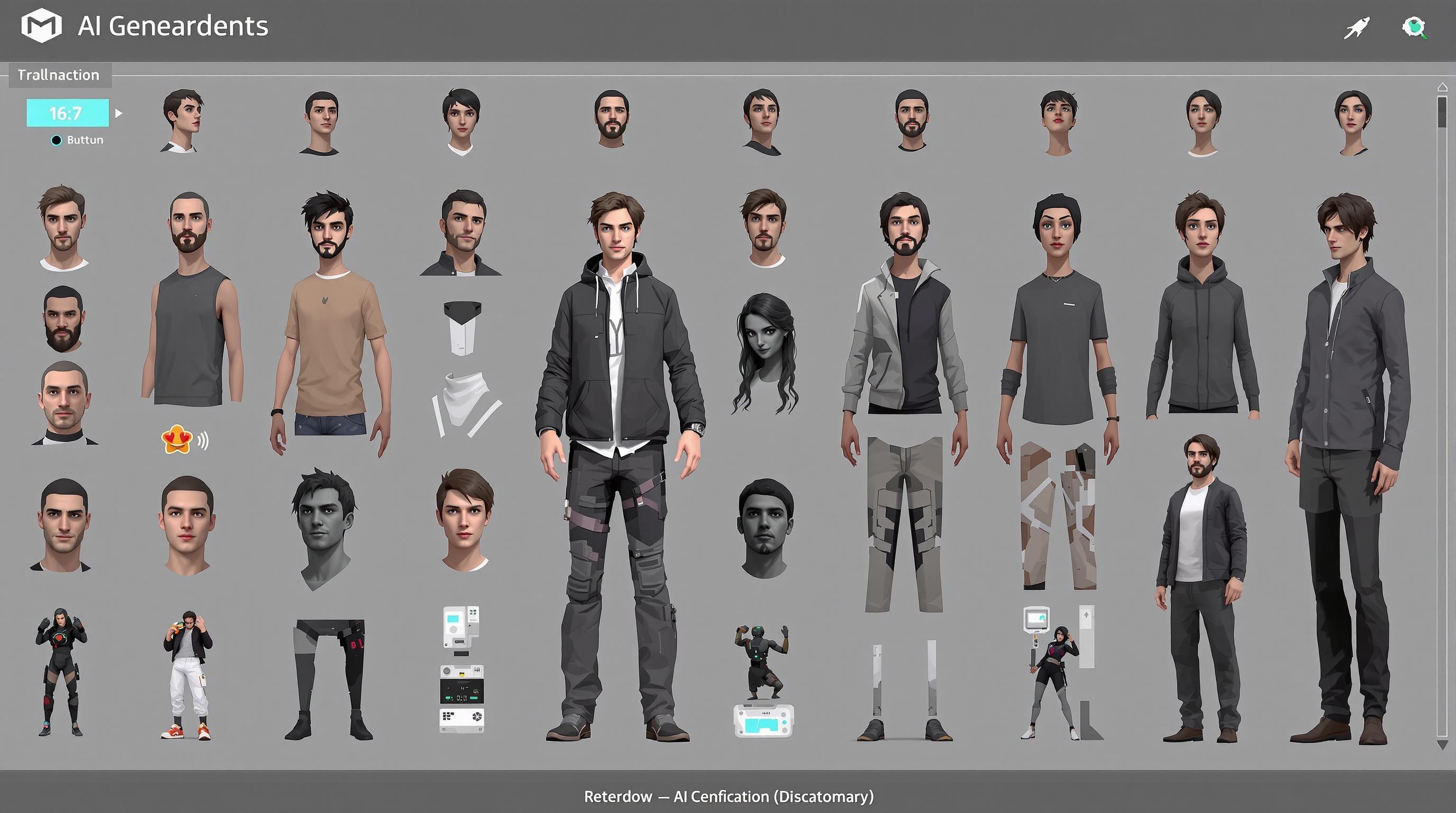
- Facial Features and Expressions: AI tools can now create diverse facial morphologies with realistic proportions and textures. More impressively, they can generate a range of emotional expressions that convey personality and bring characters to life. Technologies like those used by Character.AI specialize in creating faces that avoid the “uncanny valley” effect that has historically plagued digital human recreation.
- Body Morphology: Character body types can be algorithmically generated with appropriate proportions and anatomical accuracy. These systems allow for avatar customization across age, athletic build, height, and other physical attributes while maintaining biological plausibility.
- Clothing and Accessories: AI can design contextually appropriate attire that reflects character backgrounds, professions, and the world they inhabit. This includes period-specific clothing, futuristic designs, or fantasy elements with consistent style and detail.
- Personality Traits and Backstories: Perhaps most remarkably, AI can now generate comprehensive character personalities and histories. Atlabs offers tools that create characters with consistent psychological profiles, motivations, and narrative arcs that inform how characters might behave in various scenarios.
Leading AI Character Creation Tools for Developers
The landscape of AI character creation tools continues to evolve rapidly, with several platforms emerging as industry leaders. Character.AI has established itself as a premier solution for developers seeking to create characters with deep personality profiles and conversational capabilities. Its strength lies in generating characters that can maintain consistent personalities across interactions, making it valuable for dialogue-heavy games and interactive narratives.
Midjourney has gained recognition for its exceptional image generation quality, allowing artists to create visually striking character concepts through text prompts. Its ability to render characters in various artistic styles—from photorealistic to stylized—makes it particularly versatile across different media projects.
DALL-E and Stable Diffusion offer powerful text-to-image synthesis capabilities that excel at rapid character visualization. These tools allow creators to quickly iterate through different character designs based on detailed text descriptions, significantly accelerating the concept art phase of production.
For game development specifically, AI plugins for major engines like Unity and Unreal have transformed character pipelines. These integrations allow for procedural generation of characters directly within development environments, streamlining the transition from concept to playable character. Canva’s AI character generator has also emerged as an accessible option, offering customizable artistic styles and post-generation enhancement features like animation effects.
Open Source vs. Proprietary Character Generators
Developers face important considerations when choosing between open source and proprietary character creation solutions. Open source options typically offer greater flexibility for technical teams willing to customize the underlying models to their specific needs. These solutions can be more cost-effective for studios with limited budgets but often require stronger technical expertise to implement effectively.
Proprietary platforms like Talefy and Atlabs provide more streamlined experiences with user-friendly interfaces and comprehensive support. These tools generally offer better integration with existing creative software and production pipelines, making them attractive for commercial projects with tight deadlines. Many studios find that the time saved justifies the licensing costs of these specialized tools.
The learning curve between these options varies significantly. Open source solutions may require understanding of machine learning principles and programming, while commercial tools prioritize accessibility for artists and designers without technical backgrounds. For many production teams, the ideal approach combines both: using proprietary tools for rapid prototyping and open source solutions for specialized requirements that need custom development.
Character Creation Workflows Using AI
Effective character creation with AI follows a structured workflow that balances automation with creative control. The process typically begins with establishing character requirements—defining the role, personality, and visual style needed for the project. These specifications form the basis for initial AI generation prompts.
For base character models, developers often use text-to-image generation to create multiple concept variations. After selecting promising designs, more detailed prompts refine specific aspects like facial features, clothing, or accessories. The most advanced workflows incorporate “style memory” capabilities, where AI learns to maintain consistent characteristics across multiple generations of the same character in different poses or expressions.
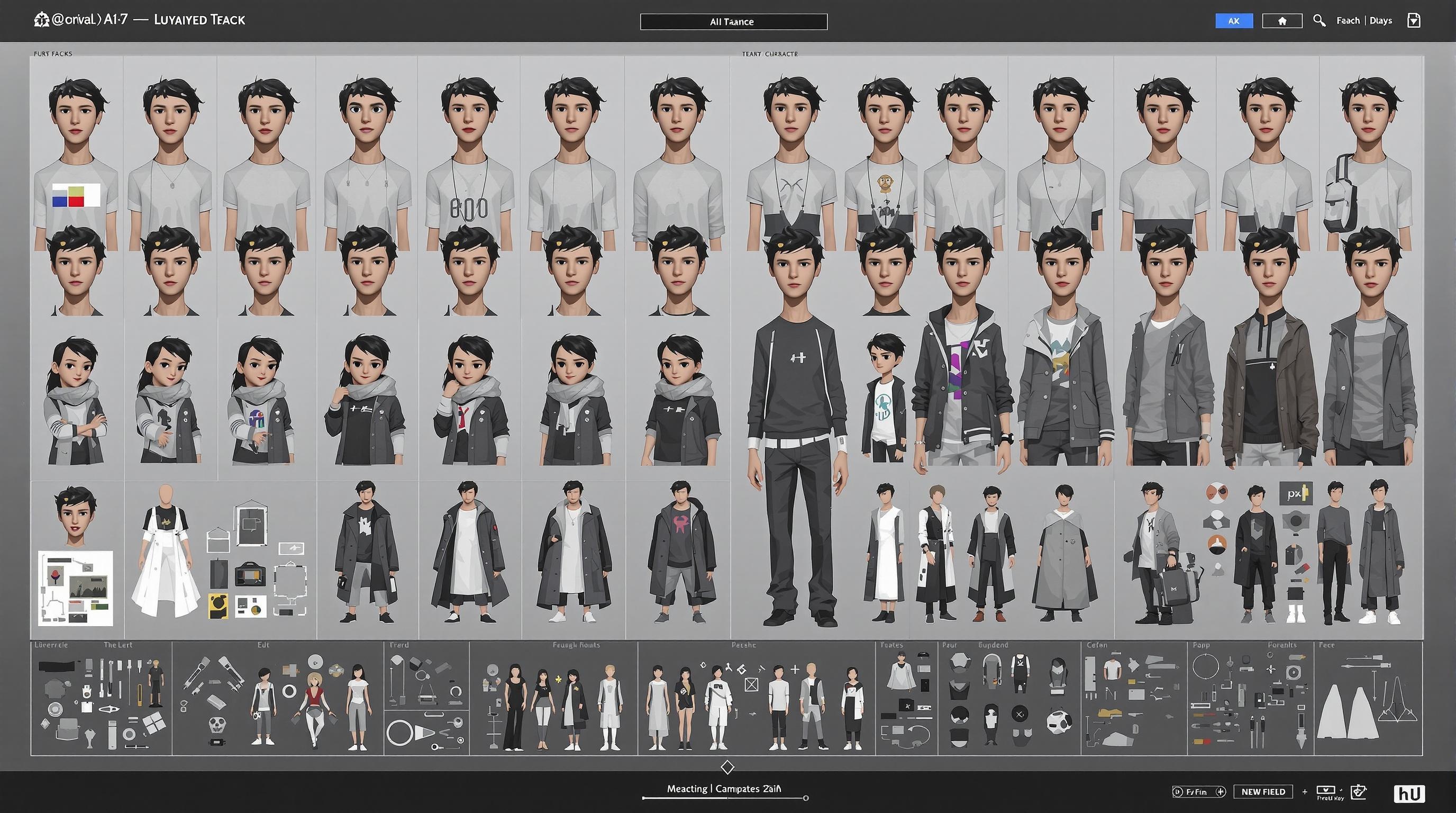
Batch creation of NPCs and background characters represents one of AI’s greatest strengths in production environments. By establishing style parameters and character archetypes, teams can generate dozens or hundreds of unique but stylistically consistent characters for populating game worlds or crowd scenes. This NPC creation process dramatically reduces the time required compared to traditional methods.
Throughout these workflows, the most successful implementations maintain clear feedback loops between AI systems and human artists, allowing for iterative refinement that preserves the creative vision while leveraging AI’s speed and pattern recognition capabilities. As noted by Epic Games’ developers, this human-AI collaboration often produces the most innovative character designs.
Overcoming Common Character Creation Challenges
AI character creation presents several common challenges that developers must address:
- Uncanny Valley Issues: AI-generated human characters can sometimes appear unsettling when they closely resemble humans but contain subtle flaws. Techniques for overcoming this include stylistic adjustments that move away from pure photorealism or focused refinement of problematic features like eyes and skin textures.
- Diversity and Inclusion: Early AI models often reflected biases in their training data, leading to limited diversity in character outputs. Modern solutions address this through expanded training datasets and explicit controls for ethnicity, body type, age, and other attributes to ensure representative character creation.
- Maintaining Artistic Vision: While AI excels at generating options, it requires guidance to align with specific artistic directions. Successful workflows use techniques like prompt engineering, style transfer, and manual post-processing to ensure AI outputs match the intended aesthetic.
- Platform Optimization: Characters created for high-end PC games may need adaptation for mobile platforms or VR environments. AI-assisted tools can now help with automatic optimization, generating lower-polygon versions or simplifying textures while preserving the character’s essential features.
Character Creation Applications Across Industries
The impact of AI character creation extends far beyond traditional gaming applications. In game development pipelines, studios now leverage AI to create entire casts of characters in a fraction of the time previously required. According to a 2023 report by Newzoo, 68% of game studios are now implementing some form of AI in their character creation process, resulting in 40-60% faster development cycles.
Film and animation studios increasingly incorporate AI character generation in pre-production phases. Directors can visualize characters before committing to expensive modeling and animation processes, exploring different designs rapidly. Tools supporting natural voice acting through platforms like ElevenLabs further enhance these capabilities, enabling full character prototyping with synchronized speech for virtual production.
The metaverse and virtual world building represent explosive growth areas for AI character creation. As digital spaces become more popular for social interaction, work, and entertainment, the demand for personalized metaverse avatars continues to surge. AI tools enable users to create distinctive representations of themselves or entirely fictional personas with unprecedented ease.
Educational content and simulation development benefit from realistic character creation for training scenarios, historical reenactments, and interactive learning experiences. Medical training, in particular, has adopted AI character generation for patient simulations that prepare healthcare workers for diverse clinical encounters.
The Future of AI Character Creation
The trajectory of AI character creation points toward several transformative developments. Procedural generation is evolving from static outputs to dynamic systems that can generate characters adapted to specific environmental contexts or narrative requirements. This contextual awareness promises characters that feel more naturally integrated into their worlds.
Real-time avatar customization represents another frontier, with systems that allow characters to be modified on the fly during gameplay or interactive experiences. Rather than pre-generating all possible variations, these approaches would enable truly responsive character development based on user interactions or story progression.
As character creation technology advances, we can expect more seamless integration between 3D character modeling and AI-driven personality development. Future systems will likely generate not just how characters look but how they think and act, encompassing dialogue generation, decision-making patterns, and emotional responses that evolve through interaction.
Ethical considerations remain paramount as these technologies advance. Responsible character creation practices must address issues of representation, avoiding harmful stereotypes while respecting cultural sensitivities. Additionally, as characters become more realistic and potentially indistinguishable from human-created content, questions of intellectual property and attribution will require thoughtful frameworks.
Optimizing Character Creation Pipelines
For studios and independent creators alike, effectively integrating AI character creation into production pipelines requires strategic planning. Successful implementation typically begins with identifying the most time-consuming aspects of traditional character creation and targeting those areas first for AI assistance. This might include concept generation, variation creation, or texture production.
Balancing automation with artistic control remains essential for quality character design. The most effective workflows establish clear handoff points between AI generation and human refinement, allowing artists to focus their expertise where it adds the most value. Free workflows leveraging tools like Google FX and Midjourney demonstrate how even limited budgets can achieve professional results through careful prompt engineering and iterative testing.
Asset management becomes increasingly important as AI enables the creation of more character variations. Implementing robust naming conventions, version control, and metadata tagging ensures teams can effectively manage the expanded character libraries that AI makes possible. Tools like AI asset management systems help organize these growing collections.
As AI character creation technology continues to advance, the creators who will benefit most are those who view AI not as a replacement for artistic judgment but as a powerful collaborator that expands creative possibilities while reducing technical barriers. The result is more diverse, engaging characters that enhance storytelling across digital media and gaming platforms.
Trending AI Listings on Jasify
- Custom Logo Design Pack – Create unique character brand identities with customized logos that match your game or content style.
- Short-Form Viral Clips – Perfect for showcasing your AI character creations on social media with professional editing and formatting.
- Custom 24/7 AI Worker – Build automated workflows to generate and manage character assets for your games or virtual worlds.
