

AI Message Generator vs AI Chatbot: Which Fits Your Team?
When it comes to using artificial intelligence for communication, two powerful tools often come up: the AI message generator and the AI chatbot. While both rely on machine learning and natural language processing, they serve very different purposes. This blog breaks down the roles of each, helps you decide which fits your team, and provides a quick decision framework to guide your choice.
Define the Job to Be Done: Speed, Scale, or Support?
The first step in choosing between an AI communication tool is defining what your team needs to accomplish. Are you looking for rapid message creation in bulk? Or do you need a system that can provide personalized, real-time interactions with customers?
- AI message generator: Best for bulk automated text generation that your team can edit and approve.
- AI chatbot: Best for ongoing dialogues where context, personalization, and automated responses matter.
What an AI Message Generator Does Best
An AI message generator (also referred to as a smart message generator or AI response generator) is designed for creating large volumes of text quickly. These tools are invaluable for marketing campaigns, outreach emails, or internal updates where the messaging is largely one-way and needs to stay consistent.
Best for Automated Text Generation
With automated messaging, teams can create social media posts, newsletters, or sales outreach at scale. Because most message generator software is powered by advanced language processing models, the copy feels human-like and channel-ready. This speeds up workflows and allows marketing or communications teams to focus on strategy rather than repetitive writing tasks.
Risks to Manage (Tone, Brand, Compliance)
While a smart messaging system accelerates content production, it does require oversight. Without proper guardrails, AI-generated responses can veer off-brand or introduce compliance concerns. Best practice is to use human-in-the-loop governance — reviewing, editing, and approving copy before it goes live. This way, you gain efficiency from automated messaging platforms without increasing reputational risk.
AI Chatbot and Conversational AI: When a Bot Makes Sense

If your need involves two-way interactions, an AI chatbot or virtual assistant is the better solution. Unlike one-way auto message generators, smart chatbots and bot messaging systems can hold conversations, adapt to context, and provide intelligent messaging in real time.
Powered by Natural Language Processing
Modern chatbot messaging systems are built using natural language processing and machine learning. This allows them to interpret user intent, personalize responses, and deliver AI generated responses instantly. Many companies use conversation AI for customer service, lead qualification, and interactive FAQs. For instance, global banks now deploy virtual chatbots to handle millions of client inquiries, significantly reducing wait times and lowering support costs.
Because they act as a dynamic AI communication tool, smart bots can also escalate to a human when the request becomes too complex. This ensures customer satisfaction without replacing the human touch entirely.
Decision Framework: Quick Checklist
Not sure whether to choose an AI assistant for automated chat systems or a conversation generator for bulk messaging? Use this checklist:
- Volume: Do you need one-way outreach or ongoing conversational messaging?
- Complexity: Is your workflow fixed and templated, or does it rely on branching logic from user inputs?
- Latency: Do you need instant, interactive replies, or can outputs be generated and reviewed in batches?
- Data: Do you just need text content, or will your AI chat system need to pull information from business systems?
- Governance: Will there be human oversight and approval, or do you need a bot that can safely respond autonomously?
Tech and Team Fit for Your AI Communication Tool
It’s not only about the tool but also about your team’s readiness. An interactive message generator or AI messaging platform requires setup, training, and integration with your existing stack. Consider:
- How the automated messaging tool will integrate with CRM, email, or chat platforms.
- Who in your team will review outputs and monitor system performance.
- Security and compliance requirements around customer data, especially with conversational AI systems.
- Analytics and KPIs: tracking CSAT, CTR, and average handle time for chatbots versus engagement metrics for message campaigns.
Start Small: Phased Rollout and Measurement
The safest approach is to start with a pilot. For example, you could test an AI text generator for one outbound campaign or implement a smart chat system for a specific FAQ area. Measure results, refine prompts, and only scale when the system demonstrates clear value.
For further insights on choosing the right AI writing system, check out our guide on how to choose an AI text generator, which covers pricing, features, and risks.
Final Takeaway: Choosing Between Scale and Conversation
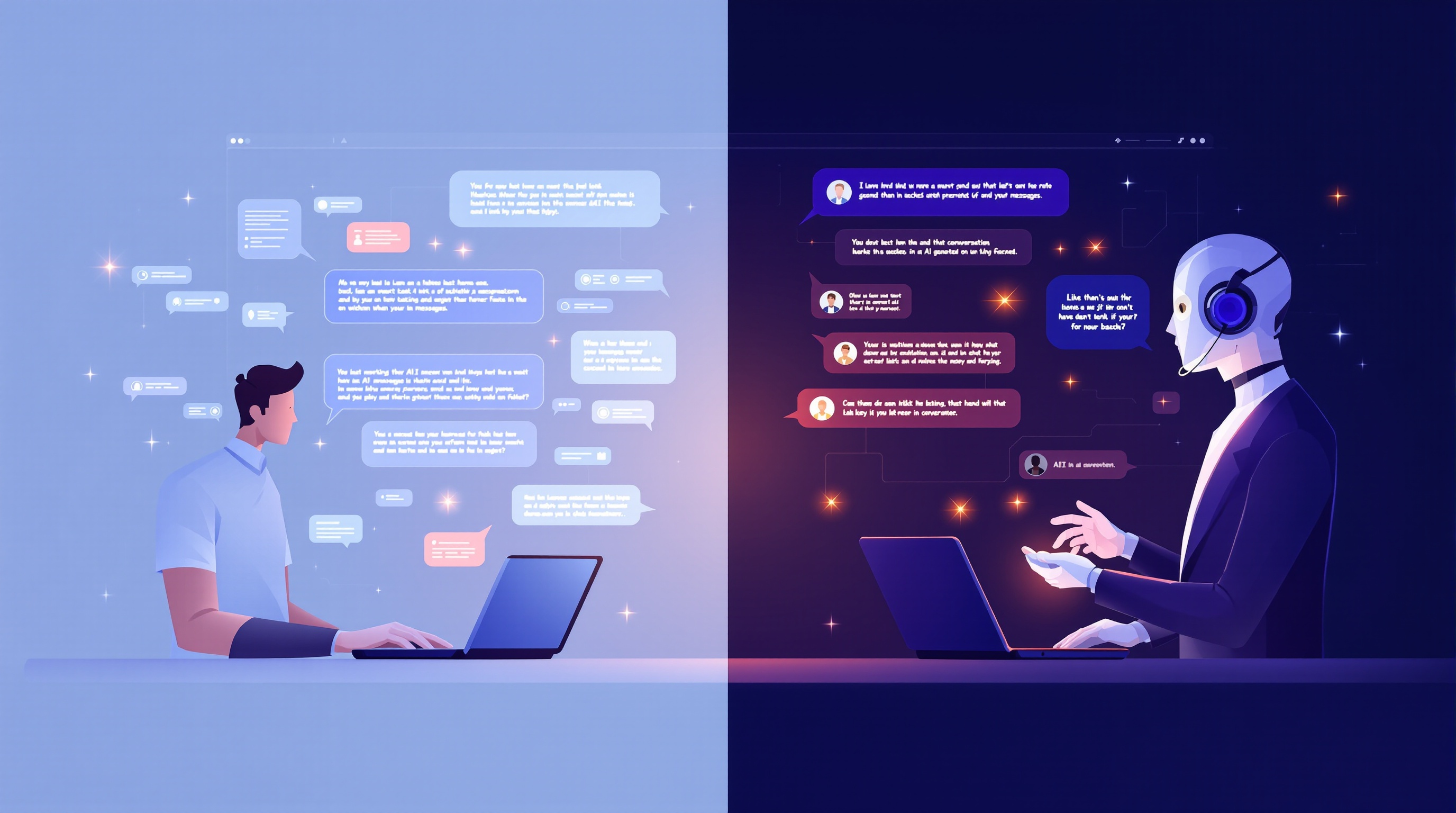
Both AI message generators and AI chatbots are powerful — but they suit different jobs. Use an intelligent message generator to scale bulk communication quickly while retaining human approval, and an AI chat system when two-way, intelligent conversations are needed. Many businesses are now exploring hybrid solutions that combine AI powered messaging with conversational AI for maximum impact.
At Jasify, we help teams evaluate the best AI communication tools for their needs so they can balance speed, personalization, and governance. Whether you’re looking for an AI powered messaging assistant for campaigns or a smart chatbot for support, start small, measure impact, and grow with confidence.
