
Unlocking Neural Networks: How AI Deep Learning is Revolutionizing Image Recognition and Natural Language Processing
The field of artificial intelligence has undergone remarkable transformation in recent years, with AI deep learning emerging as one of the most powerful approaches to solving complex computational problems. This sophisticated subset of machine learning has fundamentally changed how computers process information, recognize patterns, and make decisions without explicit human intervention. By modeling computational processes after the human brain’s neural structure, deep learning has achieved breakthroughs previously thought impossible, particularly in image recognition and natural language processing.
Understanding the Foundations of Deep Learning
AI deep learning represents a sophisticated subset of machine learning that employs multilayered neural networks to perform complex tasks like classification, regression, and representation learning. Unlike traditional algorithms that require explicit programming for each function, deep learning systems can automatically discover intricate patterns in vast amounts of data (Google Cloud).
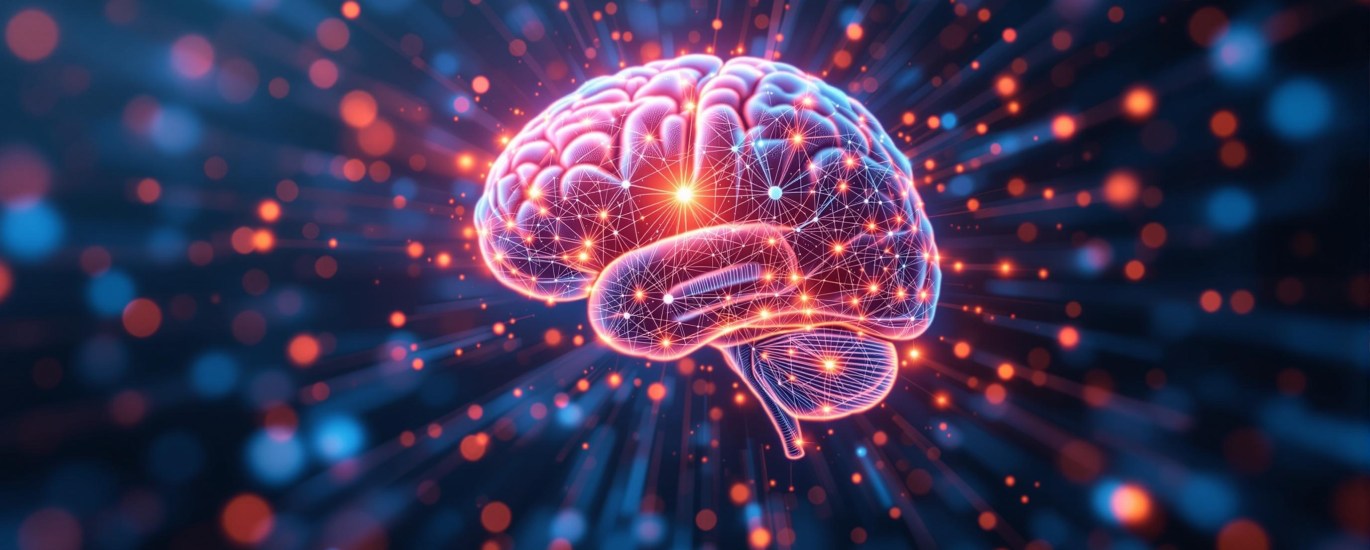
At its core, deep learning relies on neural networks—computational models inspired by the human brain’s structure. These networks consist of interconnected nodes (artificial neurons) organized in layers that process information in a coordinated and adaptive system. While these artificial neurons aren’t direct replicas of biological neurons, they mimic the basic processing principles that make the human brain such an efficient learning machine (AWS).
The comparison between artificial neurons and biological neurons in the human brain reveals interesting parallels. In biological systems, neurons receive signals through dendrites, process information in the cell body, and transmit outputs through axons. Similarly, artificial neurons receive weighted inputs, apply an activation function, and produce outputs that feed into subsequent layers of the network (MIT News).
The historical development of neural networks traces back to the 1940s, but deep learning algorithms only gained significant traction in the 2010s when computational power finally caught up with theoretical models. Key figures like Geoffrey Hinton and Yann LeCun pioneered many of the foundational techniques that drive today’s deep learning revolution, earning them recognition as the “godfathers of AI” in the artificial intelligence field (Wikipedia).
The Architecture of Neural Networks
Network Structure and Layers
Neural network architectures typically consist of three primary components: an input layer that receives data, hidden layers that process information, and an output layer that produces results. The “deep” in deep learning refers to the multiple hidden layers that enable these networks to learn increasingly abstract representations of data (IBM).
Information flows through these interconnected nodes, with each connection having an associated weight that adjusts during the learning process. The depth and complexity of neural network architectures allow them to recognize intricate patterns that simpler models might miss. As data passes through each layer, computational nodes transform the information, extracting higher-level features with each step.
Several types of neural network models serve different purposes:
- Convolutional Neural Networks (CNNs) excel at image processing
- Recurrent Neural Networks (RNNs) handle sequential data like text
- Generative Adversarial Networks (GANs) create new content
Deep networks differ from traditional neural networks primarily in their complexity and depth. While early networks might have contained one or two hidden layers, modern deep networks can incorporate thousands of layers, dramatically increasing their ability to learn complex patterns and relationships (Google Cloud).
Training Neural Networks
The learning process behind neural networks involves exposing the network to training examples and adjusting connection weights to minimize errors. This training process requires massive amounts of labeled data, especially for complex tasks like image classification or natural language processing (Viso.ai).
During training, the network makes predictions, compares them to correct answers, and adjusts its internal parameters to improve accuracy. This backpropagation technique allows information about errors to flow backward through the network, fine-tuning each layer’s contributions to the final output.
Training deep learning models presents significant challenges in terms of training time and computational requirements. According to Google Cloud, training sophisticated models can require days or weeks on specialized hardware, consuming enormous computational resources and energy (Google Cloud).
Techniques to optimize the training process include batch normalization, dropout regularization, and transfer learning, all of which help reduce training time while improving model performance and generalization.
For organizations and practitioners looking to accelerate the training process and overcome computational bottlenecks, the AI Model Training Accelerator from Use AI Shop offers specialized tools and resources designed to streamline deep learning model training. This solution is ideal for those seeking to implement deep learning efficiently and at scale.
Deep Learning vs. Traditional Machine Learning
AI deep learning differs fundamentally from traditional machine learning methods in several key aspects. While traditional approaches often rely on hand-engineered features and relatively simple algorithms like decision trees or logistic regression, deep learning automatically extracts features through its layered architecture (IBM).
The advantages of deep learning over machine learning become particularly evident when dealing with complex tasks involving unstructured data like images, audio files, or natural language. Deep learning models can handle massive amounts of data and discover intricate patterns that might be impossible to specify manually (Google Cloud).
However, deep learning isn’t always the optimal choice. Traditional machine learning techniques remain valuable for problems with limited data, straightforward relationships, or when interpretability is crucial. The type of machine learning approach selected should align with the specific requirements of the task at hand.
In pattern recognition tasks, deep learning consistently outperforms traditional methods, particularly as the complexity of the problem increases. For instance, in image classification challenges, deep learning models have achieved accuracy levels that surpass human performance in specific domains (Viso.ai).
Revolutionary Applications in Image Recognition
Image Classification and Object Detection
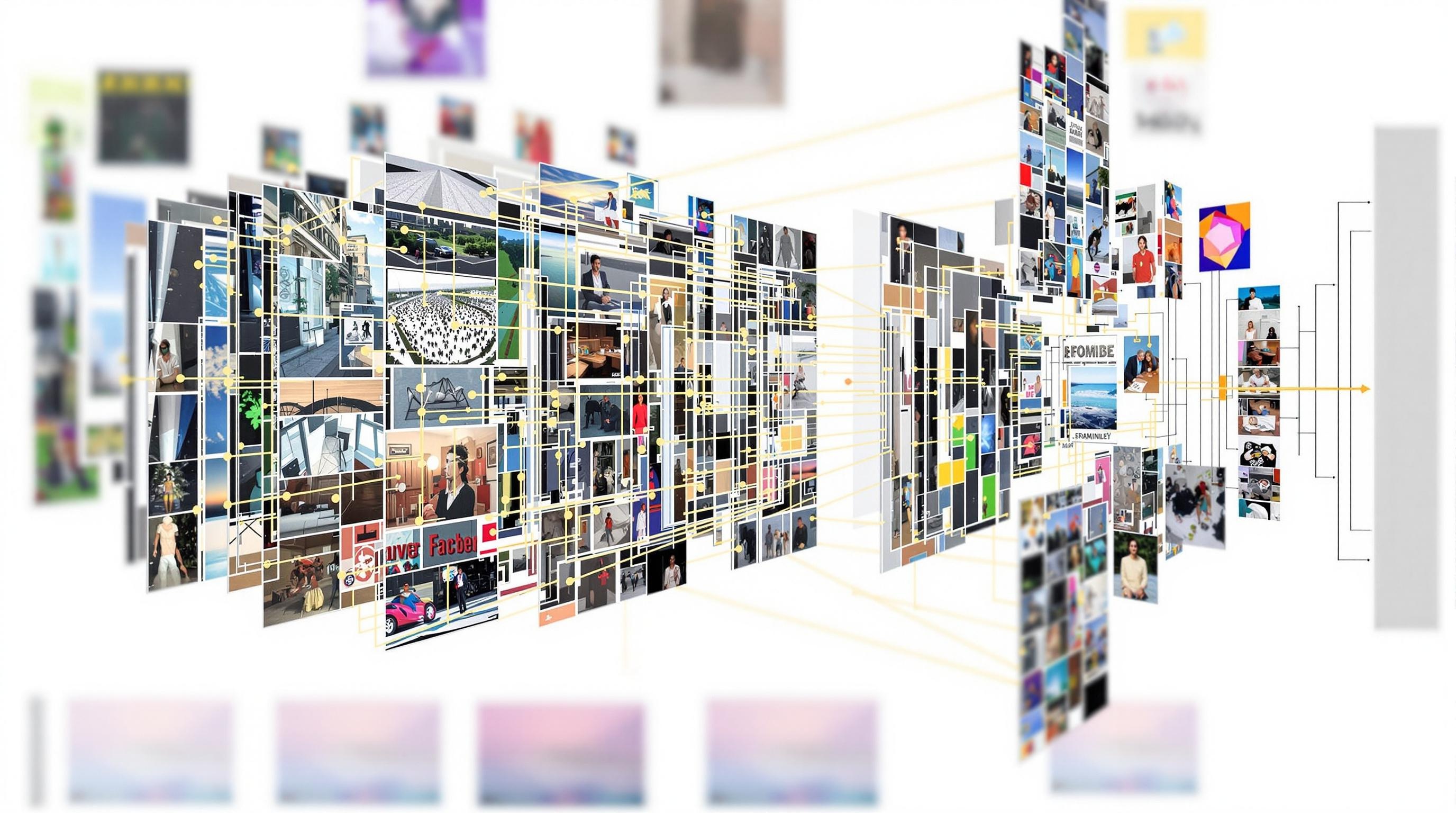
Deep learning models have transformed how computers process and classify images. Through a hierarchical learning approach, these networks first identify simple features like edges and textures in early layers, then gradually build up to recognizing complex objects in deeper layers.
The technology behind object detection leverages specialized neural network architectures that can not only classify images but also locate and identify multiple objects within a single image. These capabilities have applications ranging from security systems to retail inventory management.
Training these sophisticated networks requires millions of images and significant computational resources. According to Viso.ai, modern image recognition systems are trained on datasets containing tens of millions of labeled images to achieve their remarkable accuracy (Viso.ai).
In medical image analysis, deep learning has shown particular promise, helping detect cancers, analyze X-rays, and identify anomalies in medical scans with accuracy comparable to—and sometimes exceeding—that of human specialists.
Advanced Image Processing Capabilities
Beyond basic classification, deep learning powers advanced capabilities like fake image detection, which has become increasingly important in an era of sophisticated image manipulation tools. Neural networks can identify subtle inconsistencies that might escape human notice.
Facial recognition technologies powered by deep learning have achieved remarkable accuracy, capable of identifying individuals across variations in lighting, angle, and appearance. These systems find applications in security, authentication, and user experience personalization.
Self-driving cars represent one of the most visible applications of image recognition, using deep learning to interpret complex visual scenes in real-time. These systems must identify pedestrians, traffic signals, lane markings, and other vehicles—all while handling varying environmental conditions (Viso.ai).
Despite these advances, current limitations in image recognition include vulnerability to adversarial examples (specially crafted inputs designed to fool the network) and difficulty generalizing to scenarios significantly different from training data.
For readers interested in experimenting with computer vision, the Vision AI Starter Kit from Glazers Plaibook provides tools, sample datasets, and pre-built models for image classification and object detection—an accessible entry point for those inspired to explore image recognition with deep learning.
Transforming Natural Language Processing
Understanding Language Models
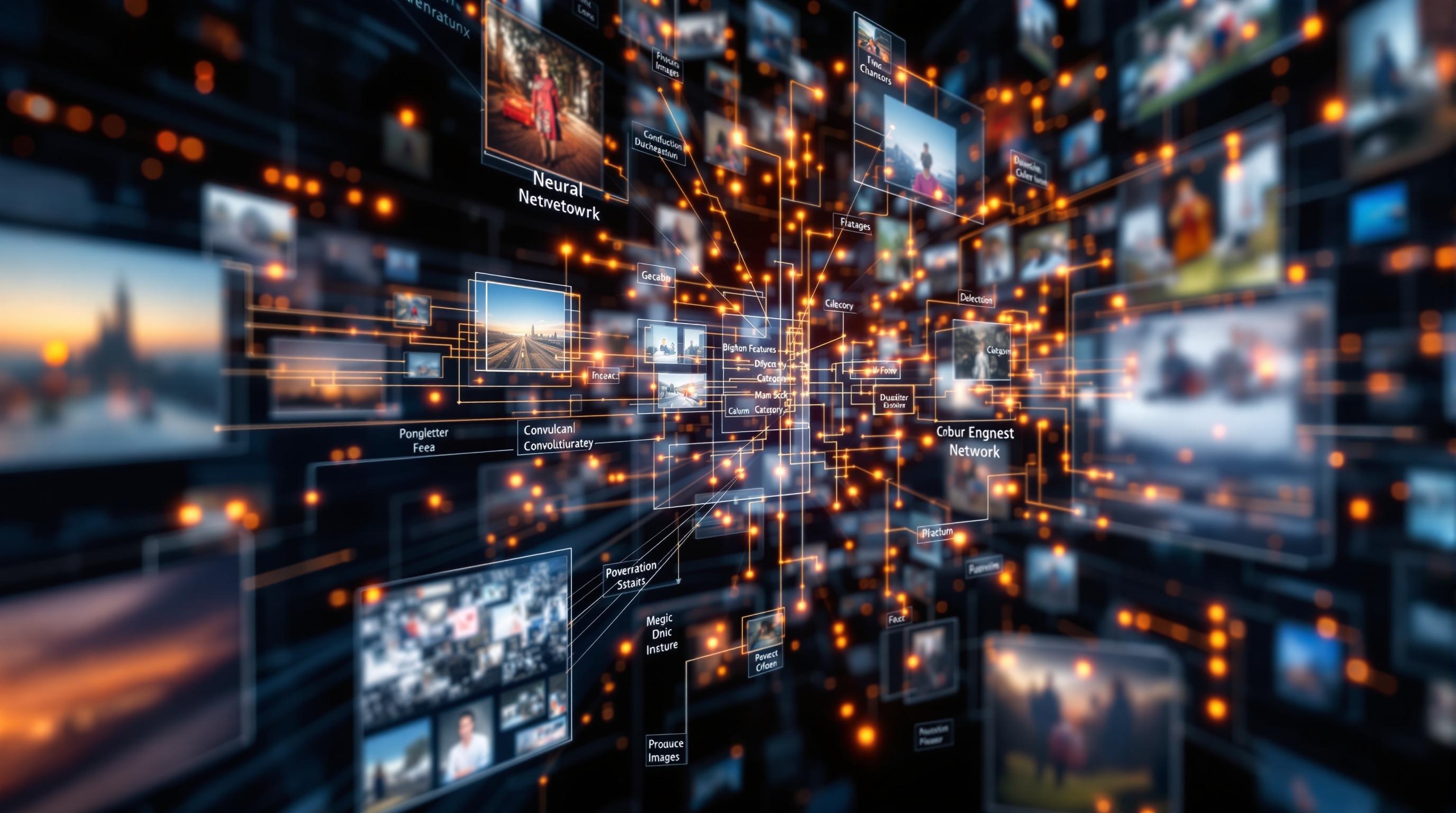
AI deep learning has revolutionized natural language processing by enabling computers to understand and generate human language with unprecedented accuracy. Modern language models can grasp nuances, context, and even some aspects of meaning that were beyond previous computational approaches (IBM).
Neural network approaches to language understanding typically involve either recurrent networks that process text sequentially or transformer models that consider all words simultaneously using attention mechanisms. These architectures allow for more sophisticated representation of language relationships.
Deep learning techniques for text analysis far surpass earlier rule-based or statistical methods. By learning distributed representations of words and phrases, these models capture semantic relationships and linguistic patterns that would be nearly impossible to program explicitly (Google Cloud).
The role of representation learning in language understanding cannot be overstated. Rather than working with raw text, deep learning models transform words into high-dimensional vectors that encode meaning and relationships, enabling much more sophisticated analysis and generation.
NLP Applications in Daily Life
Virtual assistants like Siri, Alexa, and Google Assistant rely heavily on deep learning for understanding spoken commands, interpreting user intent, and generating appropriate responses. These AI-powered assistants have become increasingly capable of handling complex queries and natural conversation (IBM).
In business contexts, deep learning enables automated analysis of customer feedback, market reports, and internal documents, supporting better business decisions without extensive manual effort. These systems can detect patterns and insights across vast amounts of text data.
Translation services have been transformed by neural networks, with systems like Google Translate moving from fragmented phrase-based translation to more coherent, context-aware approaches that produce significantly more natural results.
Text generation and summarization capabilities allow deep learning models to produce coherent articles, summarize long documents, and even create creative content, fundamentally changing how we interact with and create textual information.
For those seeking to leverage NLP advancements, the Automated NLP Suite from Use AI Shop offers ready-to-use tools for sentiment analysis, summarization, and language understanding—bridging the gap between theoretical NLP advancements and hands-on implementation.
Learning Approaches in Deep Neural Networks
Supervised vs. Unsupervised Learning
Deep learning systems employ different learning paradigms depending on the available data and task requirements. Supervised learning—the most common approach—requires labeled training examples where the desired output is known in advance. This approach works well for classification tasks but requires extensive labeled data (Google Cloud).
Unsupervised learning, by contrast, works with unlabeled data, identifying patterns and structures without explicit guidance. This approach excels at discovering hidden relationships within data and can work with raw, unstructured information.
Semi-supervised learning bridges these approaches, using a small amount of labeled data alongside a larger pool of unlabeled examples. This pragmatic compromise often delivers good performance while reducing the burden of data labeling.
Each learning type applies to different problems based on data availability and task requirements. Image classification typically uses supervised learning, while data clustering often relies on unsupervised approaches, and real-world applications frequently combine multiple learning paradigms.
Reinforcement Learning and Beyond
Reinforcement learning represents another powerful paradigm where agents learn through interaction with an environment, receiving rewards or penalties based on their actions. Deep reinforcement learning combines this approach with neural networks to tackle complex decision-making problems (Google Cloud).
Contrastive learning focuses on learning useful representations by comparing similar and dissimilar examples, a technique that has shown remarkable success in computer vision and natural language processing tasks with limited labeled data.
Transfer learning improves efficiency by reusing knowledge gained from one task to accelerate learning in related domains. This approach has become fundamental to modern deep learning, allowing models to leverage pre-existing knowledge rather than learning everything from scratch.
Generative learning models like GANs (Generative Adversarial Networks) can create new data samples that resemble their training data, enabling applications from image synthesis to data augmentation while reducing the need for human intervention in content creation.
The Future of Deep Learning
Emerging trends in deep learning applications point toward increasingly sophisticated models that combine multiple modalities (text, image, audio) into unified systems. These multimodal approaches promise more human-like understanding and reasoning capabilities (Cloudflare).
Advancements in computing power continue to enable more complex models, with specialized AI hardware accelerating both training and inference. According to Cloudflare, the exponential increase in computational capability has been fundamental to deep learning’s success.
Cloud computing plays a crucial role in democratizing access to deep learning, allowing organizations without massive computational resources to leverage sophisticated AI capabilities through cloud-based services and platforms (Cloudflare).
Generative AI represents one of the most exciting frontiers, building upon deep learning foundations to create increasingly realistic images, text, and even code. These systems demonstrate creative capabilities previously thought to be uniquely human.
Potential breakthroughs in artificial intelligence through deep learning include more efficient learning algorithms, better reasoning capabilities, and models that require less data and energy—all steps toward more general artificial intelligence.
For organizations looking to deploy, monitor, and scale AI models in the cloud, the Cloud AI Deployment Suite from Use AI Shop provides a robust platform for scalable and accessible deep learning deployments.
Implementation Challenges and Solutions
Hardware requirements for deep learning models remain substantial, with high-performance GPUs or specialized AI accelerators necessary for training complex networks. These requirements can pose barriers to entry for smaller organizations (Cloudflare).
The need for massive amounts of training data presents another challenge, particularly for specialized domains where labeled examples may be scarce. Techniques like data augmentation, synthetic data generation, and transfer learning help address these limitations.
To help overcome data scarcity, the Data Augmentation Toolkit from Glazers Plaibook offers a suite of techniques to expand datasets and improve model generalization—an essential resource for AI developers.
Reducing human input and manual effort in the AI development pipeline has become a focus area, with automated machine learning (AutoML) tools helping to democratize access to deep learning capabilities without requiring deep technical expertise. The AutoML Platform Access from Use AI Shop enables fast prototyping and deployment of deep learning models, lowering the barrier for non-experts.
Current deep learning algorithms still face limitations in interpretability, generalization to new scenarios, and data efficiency. Research continues to address these challenges through techniques like explainable AI and more sample-efficient learning methods. The Explainable AI Dashboard from Use AI Shop provides visualization tools and interpretability metrics, helping practitioners and stakeholders understand model decisions and build trust in AI systems.
Platforms like Google Cloud and Vertex AI provide integrated environments for developing, training, and deploying deep learning models, making advanced AI capabilities more accessible to organizations across industries (Google Cloud).
As AI deep learning continues to evolve, its impact on image recognition, natural language processing, and countless other domains will only grow more profound. The neural networks that power these advances represent one of humanity’s most powerful tools for solving complex problems and augmenting human capabilities across virtually every field of endeavor.
