
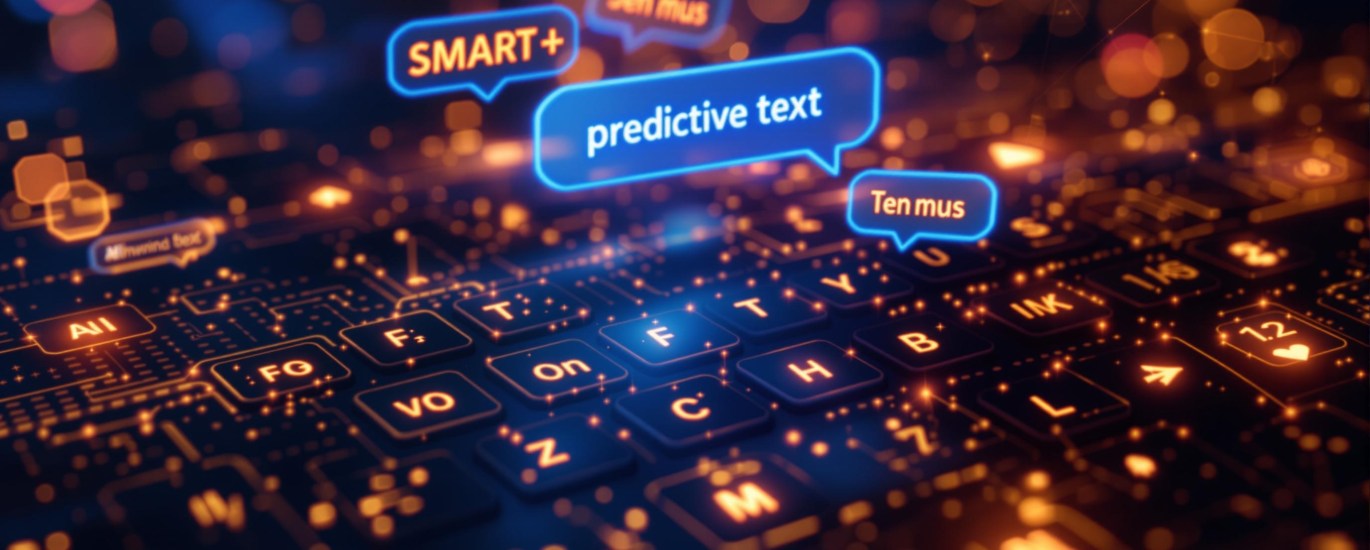
The way we communicate digitally has been revolutionized by predictive text technology. From the earliest mobile phones to today’s sophisticated AI-powered keyboards, predictive text has evolved from a simple convenience to an essential component of our digital interactions. This technology not only speeds up our typing but fundamentally changes how we express ourselves in the digital realm. Let’s explore how smart auto-correction and intelligent typing are reshaping communication in the modern age.
Understanding Predictive Text Technology
Predictive text technology began as a practical solution for limited input interfaces, particularly the 12-key phone keypads where a single key represented multiple letters. Early systems like T9 (Text on 9 keys) allowed users to type words with fewer keystrokes by predicting words from keypress patterns rather than cycling through letters sequentially. This represented the first major breakthrough in text prediction technology.
Unlike basic autocorrect, which simply fixes spelling errors after typing, predictive text anticipates and suggests the next word or phrase during typing. This fundamental difference means users can select word completions before finishing words, leading to faster and more fluid text input. Modern predictive typing systems go beyond simple word completion to suggest contextually appropriate phrases based on what you’re likely to say next.
The core technologies powering text prediction include sophisticated machine learning algorithms that analyze vast datasets of written language, natural language processing (NLP) that understands syntax and context, and statistical models that calculate letter or word probabilities to generate accurate suggestions. These components work together to create an intelligent typing experience that feels almost like the keyboard is reading your mind.
The growth of predictive input systems has been remarkable, expanding from basic mobile phones to smartphones, tablets, computers, smart TVs, and even wearable devices. Each platform presents unique challenges and opportunities for text predictor technology, but the fundamental goal remains consistent: to make digital communication faster, more accurate, and less cognitively demanding.
The Science Behind Predictive Algorithms
Modern word suggestion algorithms analyze typing patterns with remarkable sophistication. These systems track not only the words you use but how you use them, creating personalized language models that improve over time. The algorithms consider factors like word frequency, recent usage, contextual relevance, and even the time of day or location to generate smart suggestions that align with your communication style.
Machine learning plays a crucial role in improving predictive intelligence. As you type, these systems continuously learn from your inputs, adapting to your unique vocabulary and phrasing preferences. This self-improving aspect of predictive text technology means that the longer you use a particular keyboard or device, the more accurately it can anticipate your needs through its word predictor capabilities.
Natural language processing enables predictive language systems to understand grammar, syntax, and semantic relationships between words. This linguistic awareness allows the technology to suggest words that make grammatical sense in context. For example, after typing “I need to buy,” the system might suggest nouns rather than verbs, demonstrating an understanding of sentence structure beyond simple word prediction.
Word suggestion engines must constantly balance accuracy and context. They need to provide helpful suggestions without being intrusive or distracting. This delicate balance is achieved through complex algorithms that weigh multiple factors simultaneously to deliver the most relevant smart suggestions at precisely the right moment.
How Predictive Analysis Works
Data collection and user typing pattern recognition form the foundation of effective predictive text technology. Every time you type, accept, or reject a suggestion, you’re providing valuable training data that helps refine the system’s understanding of your preferences and habits. This personalized approach to text prediction makes modern keyboards feel increasingly intuitive over time.
Statistical models power text predictor technology by calculating the probability of what you’ll type next based on what you’ve already typed. These models consider n-grams (sequences of words), collocation patterns (words that commonly appear together), and other linguistic features to generate relevant typing suggestions. The more sophisticated the model, the more accurate and contextually appropriate the predictions become.
Integration of contextual clues significantly improves smart suggestions. Modern systems consider not just the immediate textual context but also broader factors like the application you’re using (email vs. messaging), your relationship with the recipient, and even your typing speed or the time of day. This multi-dimensional awareness enables much more relevant and helpful auto-suggestion features.
Achieving a balance between prediction accuracy and computational resources remains an ongoing challenge. While more complex models generally produce better suggestions, they also require more processing power and memory. Developers of predictive typing systems must optimize their algorithms to deliver excellent performance even on devices with limited resources, especially mobile phones where battery life is a concern.
Evolution of Auto-Correction and Smart Typing
Early auto-text systems were rudimentary compared to today’s intelligent auto-correct features. The first commercial text messaging service launched in 1993, with predictive text systems like T9 appearing in the mid-1990s. These early systems relied on static dictionaries with limited vocabularies and minimal personalization capabilities. They could help reduce keystrokes but often produced frustrating or humorous errors when encountering unfamiliar words.
Several milestones mark the development of typing suggestions over the years. The transition from multi-tap input (pressing a key multiple times to cycle through letters) to predictive text reduced keystrokes per character significantly—from approximately 2.03 for multi-tap to 1.15 for systems like LetterWise, according to research cited by Wikipedia. This quantifiable efficiency gain demonstrated the value of predictive technology even in its early stages.
Keyboard predictions have evolved from basic word completion to highly contextual suggestion systems. Modern keyboards like SwiftKey and Gboard use AI to support over 80 languages and offer personalized suggestions based on individual usage patterns. This evolution represents a shift from generic prediction to highly individualized language prediction that adapts to each user’s unique communication style.
The transition from static dictionaries to dynamic language prediction marks perhaps the most significant advancement in this field. Early systems searched fixed word lists, while today’s models continuously learn and adapt to evolving language use, including newly coined terms, slang, and personal expressions. This adaptive capability makes modern predictive text feel remarkably in tune with contemporary communication.
From Simple Corrections to Intelligent Assistance
Early auto-correct features had significant limitations. They could fix common spelling errors but lacked contextual awareness, often creating embarrassing “autocorrect fails” when they misconstrued a user’s intention. These systems relied on simple pattern matching rather than true language understanding, leading to frustrating experiences when dealing with specialized vocabulary or informal language.
The introduction of smart auto-correction technologies marked a turning point. These systems began incorporating machine learning and natural language processing to better infer user intent. Rather than simply identifying misspelled words, they could evaluate the semantic context and make more intelligent guesses about what the user actually meant to type, reducing errors and improving the overall typing experience.
Suggestive typing technology emerged as keyboards began to offer word completions and next-word predictions. This proactive approach to text entry moved beyond correction to acceleration, allowing users to compose messages with fewer keystrokes by selecting from contextually relevant suggestions. According to Databank, this shift represented a fundamental change in how we interact with text input interfaces.
Modern predictive typing systems now anticipate entire phrases, not just individual words. They can suggest common expressions, greetings, or responses based on conversation context. This level of intelligence transforms the keyboard from a simple input device into a collaborative communication assistant that actively helps shape our digital conversations through advanced auto-prediction capabilities.
Benefits of Predictive Text in Modern Communication
Time savings through text completion and auto-suggestion features represent one of the most tangible benefits of predictive text technology. By reducing the number of keystrokes required to compose messages, these systems allow users to communicate more efficiently. This efficiency is particularly valuable on mobile devices, where typing can be cumbersome compared to traditional keyboards.
The reduction in typing errors through smart auto-completion has both practical and social benefits. Beyond saving time on corrections, it helps prevent miscommunications and maintains a professional appearance in written communication. The intelligent auto-correct features in modern keyboards catch not only spelling errors but also contextual mistakes that might change the meaning of a message.
Enhanced communication flow through intuitive typing creates a more natural digital conversation experience. When typing suggestions accurately predict what you want to say next, the boundary between thought and expression diminishes. This fluidity can make digital communication feel more like natural conversation, particularly when the suggestive typing technology has been well-trained on your personal communication style.
Accessibility improvements for users with mobility challenges represent a particularly important benefit of predictive text. For individuals with limited dexterity or motor control issues, typing can be physically demanding and time-consuming. Word completions and suggestive word input significantly reduce the physical effort required, making digital communication more accessible to everyone regardless of physical ability.
Productivity Enhancements
Speed improvements through auto-fill capabilities directly translate to productivity gains in both personal and professional contexts. Studies show that predictive text can increase typing speed by 15-30% for most users, with even greater gains for those who fully embrace and train their predictive systems. This efficiency multiplies across the hundreds of messages many people send daily.
Reduced cognitive load through suggested words allows users to focus more on the content of their communication rather than the mechanics of typing. By offloading some of the mental effort involved in word selection and spelling, predictive text frees up cognitive resources for higher-level thinking about message content, tone, and impact.
Task streamlining with auto-forward features helps users complete routine communications more efficiently. Common phrases, standard responses, and frequently used expressions can be generated with minimal input, making repetitive communication tasks significantly faster. This aspect of predictive technology is particularly valuable in professional contexts where certain types of messages are sent regularly.
The measurable impact on communication efficiency extends beyond individual interactions to broader productivity gains. In professional environments, faster and more accurate digital communication can improve collaboration, reduce misunderstandings, and accelerate workflows. For businesses, the cumulative effect of these improvements across an organization can be substantial.
Predictive Text Across Different Platforms and Devices
Mobile keyboards represent the most common interface for predictive text technology. iOS and Android predictive typing systems employ slightly different approaches but share the core goal of accelerating and improving text input. Android’s Gboard and iOS’s built-in keyboard both leverage cloud-based learning while maintaining on-device personalization to balance performance with privacy, as noted by Fleksy.
Desktop applications and browser-based text prediction have become increasingly sophisticated, with features like Gmail’s Smart Compose suggesting entire sentences as you type. These implementations often have access to more computing power than mobile devices, enabling more complex predictive algorithms and more extensive personalization. The integration of text predictor features into productivity software continues to evolve rapidly.
Smart TVs and gaming consoles face unique challenges in implementing predictive input due to their remote-based control systems. On these devices, text prediction becomes even more valuable as it reduces the tedium of navigating on-screen keyboards with directional buttons. The constraints of these interfaces have driven innovations in predictive technology specifically designed for non-keyboard input methods.
Wearable technology presents perhaps the most challenging environment for predictive text due to extremely limited screen space and input capabilities. Smart watches and similar devices rely heavily on highly accurate predictive typing to make text input viable on their tiny interfaces. These constraints have pushed developers to create increasingly efficient and accurate prediction algorithms that can function effectively with minimal user input.
Personalization in Predictive Text Technology
Predictive algorithms learn from individual usage patterns through continuous analysis of your typing habits. Each time you accept a suggestion, manually type a word, or correct an auto-prediction, the system updates its understanding of your preferences. This learning process enables the technology to adapt to your unique vocabulary, phrasing tendencies, and communication style over time.
User vocabulary adaptation is particularly important for professionals in specialized fields. Whether you’re a doctor using medical terminology, a lawyer citing legal statutes, or a software developer discussing programming concepts, predictive text systems can learn your technical vocabulary and begin offering relevant suggestive word input that matches your professional needs.
Privacy considerations in smart word prediction have become increasingly important as these systems collect more data about our communication patterns. Most modern implementations process inputs locally on the device when possible, or anonymize data before cloud processing to protect sensitive information. Users concerned about privacy can typically adjust settings to limit data sharing or disable certain predictive features entirely.
Balancing personalization with standardized language norms presents an interesting challenge. While adapting to individual preferences improves the user experience, predictive systems must also maintain adherence to generally accepted spelling and grammar conventions. This balance ensures that the technology enhances communication rather than reinforcing poor habits or creating idiosyncratic patterns that might confuse others.
Challenges and Limitations of Current Predictive Systems
Accuracy issues in predictive technology remain an ongoing challenge, particularly for less common languages or specialized domains. Despite significant advances, predictive systems still sometimes suggest inappropriate words or fail to offer relevant completions, especially when dealing with novel concepts or recently coined terms that haven’t yet been incorporated into their training data.
Language and dialect challenges create particular difficulties for word predictor systems. Languages with complex morphologies, diverse dialects, or non-Latin alphabets often receive less attention in development, resulting in less effective prediction. Similarly, dialects, regional expressions, and code-switching between languages can confuse predictive algorithms that expect more standardized language use.
The “predictive text bubble” represents a subtle but important concern. When prediction systems continuously reinforce existing patterns by suggesting words and phrases you’ve used before, they may inadvertently narrow your linguistic expression over time. This self-reinforcing loop could potentially limit vocabulary diversity and creative expression if users rely too heavily on suggestions.
Technical limitations of current predictive typing systems include computational constraints, especially on mobile devices with limited processing power and battery life. More sophisticated prediction models require more resources, creating a trade-off between prediction quality and device performance. Additionally, latency issues can disrupt the typing flow if suggestions don’t appear quickly enough to be useful.
Emerging Innovations in Smart Auto-Correction
AI advancements are enhancing predictive intelligence through more sophisticated neural network architectures and training methodologies. These improvements enable more nuanced understanding of language context and user intent, resulting in more accurate and contextually appropriate suggestions. The integration of larger language models is particularly promising for next-generation predictive text capabilities.
Multimodal prediction incorporating context beyond text represents an exciting frontier. Future systems may consider factors like location, time of day, current activities, or even emotional state (detected through typing patterns or other sensors) to provide more relevant suggestions. This contextual awareness could make predictive text feel almost prescient in its ability to anticipate communication needs.
Cross-application learning for improved auto-suggestion features allows predictive systems to develop a more comprehensive understanding of user communication styles. By learning from emails, messages, documents, and social media posts (with appropriate privacy safeguards), these systems can build richer user profiles and offer more consistent prediction across different platforms and contexts.
Real-time language model updates for predictive algorithms ensure that prediction systems stay current with evolving language use. As new terms enter the lexicon through cultural phenomena, technological developments, or world events, predictive text systems must rapidly incorporate these changes to remain relevant and useful for contemporary communication.
The Future of Predictive Text Technology
Potential developments in text predictor technology include increasingly sophisticated AI models that better understand context and intent. As computing power increases and algorithms improve, we can expect predictions that consider not just the immediate textual context but the broader conversational goals, relationship dynamics, and even subtle emotional nuances of communication.
Integration with voice and gesture inputs will create multimodal predictive systems that seamlessly blend different input methods. For example, a system might use voice tone to inform text suggestions or allow gestural shortcuts to select between different predictive options. This integration could make digital communication even more fluid and natural across various devices and contexts.
Large language models like those powering ChatGPT and similar AI systems will likely play an increasingly important role in next-generation typing suggestions. These models’ deep understanding of language structure and semantics could enable dramatically more sophisticated prediction capabilities, potentially suggesting not just words but ideas, references, or creative expressions that enhance communication.
Ethical considerations for increasingly predictive systems will become more prominent as these technologies advance. Questions about autonomy, authenticity, and the appropriate boundaries of algorithmic assistance in human communication will need thoughtful consideration. Striking the right balance between helpful suggestion and preserving individual voice will be crucial for the healthy evolution of predictive technology.
Beyond Text Prediction
Sentiment and tone prediction represents a frontier beyond simple word prediction. Future systems may suggest adjustments to make messages more friendly, formal, concise, or persuasive based on the detected purpose of the communication. This could help users communicate more effectively across different contexts and relationships while maintaining appropriate tone.
Cross-lingual predictive capabilities could help bridge language barriers by suggesting translations or multilingual alternatives as users type. For multilingual users, this could facilitate more fluid code-switching between languages, while for those learning new languages, it could provide helpful assistance with vocabulary and grammar.
Integration with augmented reality interfaces might eventually allow predictive text to move beyond screens entirely. Imagine typing in air with predictive completions appearing in your AR glasses, or having suggested responses to a conversation partner’s comments discretely displayed in your field of vision. These innovations could fundamentally transform how we interact with text in digital environments.
Predictive systems that adapt to emotional context represent perhaps the most advanced frontier. By analyzing linguistic patterns, typing rhythm, and other signals, these systems might detect emotional states and adjust suggestions accordingly—offering more empathetic phrases when consoling a friend, more enthusiastic options when celebrating, or more reserved language in professional contexts.
Implementing Effective Predictive Text in Your Digital Life
Customizing auto-complete and smart prediction settings can significantly improve your experience with predictive technology. Most devices and applications offer options to control how aggressively the system suggests or corrects text, whether it learns from your typing, and which specialized vocabularies (medical, legal, technical) it should incorporate. Taking time to configure these settings can transform an occasionally frustrating feature into a genuinely helpful assistant.
Training your devices for better word completions happens both intentionally and organically. By consistently using your preferred terminology and either accepting helpful suggestions or manually correcting unhelpful ones, you teach the system your preferences over time. For specialized vocabulary, deliberately using those terms regularly helps the system recognize them as legitimate parts of your lexicon rather than potential errors.
Knowing when to rely on suggestive typing and when to disable it represents an important skill in the modern digital landscape. For routine communications, allowing the system to suggest common phrases can save significant time and effort. However, for creative writing, sensitive communications, or specialized technical content, you might want to disable or be more selective about accepting suggestions to maintain your authentic voice.
Exploring tools and applications with superior predictive capabilities can enhance your digital communication experience. Specialized keyboard apps like AI-powered chatbots available on platforms like Jasify offer advanced predictive features beyond what’s built into standard operating systems. These tools often provide more sophisticated personalization, better support for multiple languages, and more nuanced context awareness.
Predictive text technology has transformed from a simple convenience into an essential component of digital communication. As these systems continue to evolve, they promise to make our digital interactions not just faster but more nuanced, accessible, and expressive. The future of predictive text lies not just in guessing what words we might type next, but in understanding the human intentions, emotions, and contexts behind those words—truly making technology a partner in communication rather than just a tool.
Trending AI Listings on Jasify
- Custom AI Product Recommendation Chatbot – A smart chatbot system that uses AI to understand customer needs and provide personalized product recommendations, similar to how predictive text anticipates user intentions.
- Custom 24/7 AI Worker – An automated system that can handle routine business tasks using AI-powered text prediction and response generation to improve workflow efficiency.
- High-Impact SEO Blog – AI-powered content creation that leverages natural language processing similar to predictive text systems to generate optimized, engaging written content.
