What is Machine Learning?
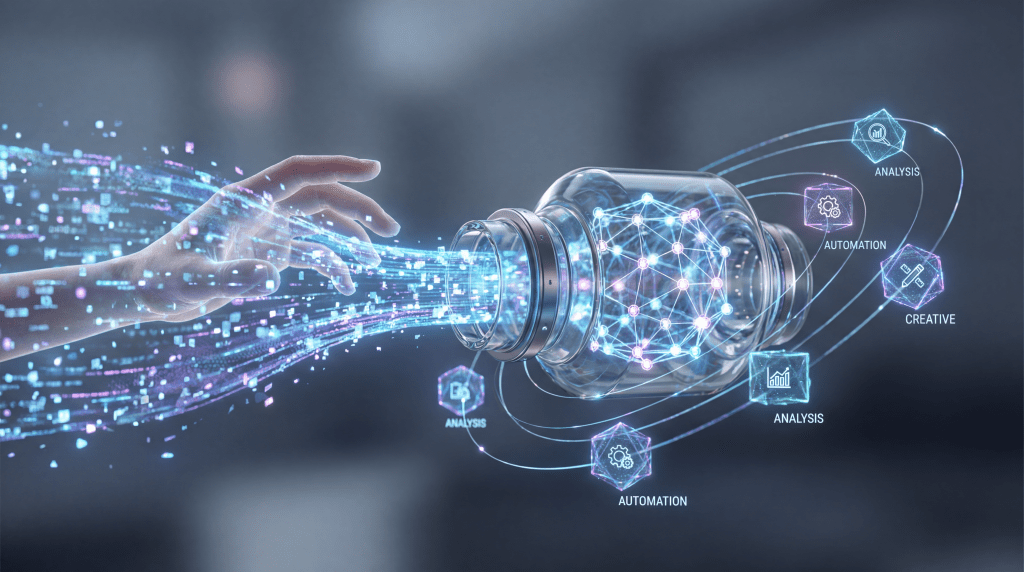
Machine learning is a branch of artificial intelligence that enables computer systems to learn and improve from data without being explicitly programmed for every task. It matters because it powers everyday technologies like email spam filters, personalized recommendations, and predictive analytics that help businesses make smarter decisions. Data scientists, business analysts, and software developers use machine learning to solve complex problems by training algorithms on historical data. It’s applied across nearly every industry—finance uses it for fraud detection, healthcare for diagnosing diseases, and retail for personalizing customer experiences. The global machine learning market is projected to reach $113.10 billion in 2025, reflecting its growing importance in modern business.
At its core, machine learning works by identifying patterns in data. Instead of giving a computer step-by-step instructions, you feed it examples and let it figure out the rules on its own. Think of it like teaching a child to recognize animals—you don’t program them with “if it has four legs and barks, it’s a dog.” You show them lots of dogs until they start recognizing the pattern themselves.
There are three main types of machine learning:
- Supervised learning – The algorithm learns from labeled examples (like teaching it with photos marked “cat” or “dog”)
- Unsupervised learning – The system finds patterns in unlabeled data without guidance
- Reinforcement learning – The algorithm learns through trial and error, receiving rewards for good decisions
Most business applications use supervised learning because companies usually have historical data they can learn from. Your email spam filter? That’s supervised learning trained on millions of examples of spam and legitimate emails. The recommendation engine suggesting what to watch next? Same principle, different application.
What is Deep Learning?
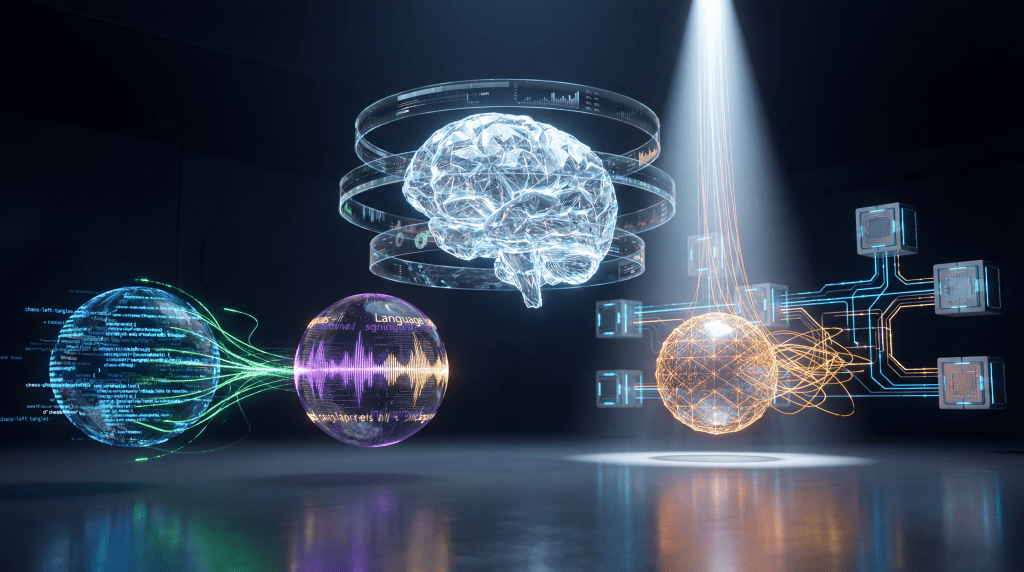
Deep learning is a specialized subset of machine learning that uses multi-layered artificial neural networks to process vast amounts of data and automatically discover complex patterns. Its structure mimics how neurons work in the human brain, allowing it to learn hierarchical representations of information from images, text, audio, and other unstructured data. This matters for tackling highly complex problems like natural language understanding, computer vision, and autonomous driving that traditional machine learning struggles with. AI researchers and engineers at tech companies and research labs use deep learning to build cutting-edge applications that require nuanced understanding of messy, real-world data.

Here’s what makes deep learning different: it can automatically figure out which features matter. Traditional machine learning needs humans to manually identify important characteristics in the data—you’d have to tell the system “look for edges, then corners, then shapes” to recognize objects in photos. Deep learning figures that out on its own.
The “deep” part refers to the multiple layers in these neural networks. Each layer learns progressively more abstract representations:
- First layer might detect edges and simple patterns
- Middle layers recognize shapes and textures
- Final layers identify complex objects like faces or cars
But there’s a catch—deep learning is hungry. It needs massive datasets (often millions of examples) and serious computing power to work well. That’s why you mostly see it at companies with both resources: Google using it for search, Tesla for self-driving cars, or healthcare systems analyzing medical images.
The practical reality? Deep learning excels at perception tasks—anything involving vision, speech, or language. If your problem involves understanding what’s in an image or what someone said, deep learning is probably your best bet. For everything else, simpler machine learning methods often work just as well with far less complexity.
What is the Main Difference Between Machine Learning and Deep Learning?
The main difference between machine learning and deep learning comes down to how each approach handles data and features. Traditional machine learning requires humans to manually identify and engineer the important features in data—you tell the algorithm what to look for. Deep learning automates this feature extraction process using neural networks that discover patterns on their own. This fundamental distinction affects everything else: deep learning needs vastly more data and computing power but can solve more complex problems, while traditional machine learning works well with smaller datasets and limited hardware but requires more human expertise upfront.
Here’s how the key differences break down in practice:
| Aspect | Machine Learning | Deep Learning |
|---|---|---|
| Data Requirements | Works with small to medium datasets (hundreds to thousands of examples) | Needs large datasets (typically millions of examples) |
| Feature Engineering | Requires manual feature extraction by experts | Automatically learns features from raw data |
| Hardware Needs | Runs on standard CPUs | Usually requires GPUs or specialized hardware |
| Training Time | Minutes to hours | Hours to weeks |
| Interpretability | Generally easier to understand and explain | Often works like a “black box” |
| Best For | Structured data, smaller problems, when you need to explain decisions | Unstructured data (images, text, audio), complex pattern recognition |
Let’s make this concrete. Say you’re building a system to predict customer churn. With traditional machine learning, you’d start by manually creating features: “days since last purchase,” “average order value,” “number of support tickets.” You’d choose which patterns matter based on business knowledge. A decision tree or random forest could then learn from these features pretty quickly, even with just a few thousand customer records.
Now imagine you’re building a system to automatically caption images. There’s no simple way to manually define the features that matter—what makes an image show “a dog playing in a park” versus “a cat sleeping on a couch”? That’s where deep learning shines. It can process the raw pixels and learn the complex visual patterns on its own. But you’d need millions of labeled images and serious computing power to train it.
The computational difference is real. According to industry data, the AI in banking market is expected to grow from $19.90 billion in 2023 to $315.50 billion by 2033, largely driven by institutions investing in the infrastructure needed for deep learning applications.
How Does Deep Learning Relate to Machine Learning and AI?
Deep learning is a specialized technique within machine learning, which itself is a core approach within the broader field of artificial intelligence. Think of it as nested circles: AI is the largest circle representing any system that mimics human intelligence, machine learning is a circle within AI covering systems that learn from data, and deep learning is an even smaller circle within machine learning using neural networks with multiple layers. This hierarchical relationship means that all deep learning is machine learning, and all machine learning is AI, but not all AI uses machine learning, and not all machine learning uses deep learning.
Here’s how these terms evolved and fit together:
Artificial Intelligence (1950s-present) started as the broad goal of making machines intelligent. Early AI used rule-based systems—programmers manually coded every decision. Chess computers from the 1990s worked this way: they didn’t learn, they just followed complex rules written by experts.
Machine Learning (1980s-present) emerged as a more practical approach to AI. Instead of coding every rule, let the computer learn from examples. This works better for messy, real-world problems where you can’t possibly write all the rules. Most of what we call “AI” today is actually machine learning.
Deep Learning (2010s-present) became feasible when we got enough data and computing power to train large neural networks. It’s not conceptually new—neural networks were invented in the 1950s—but only recently became practical for real applications.
This matters because people often confuse these terms. When someone says “we’re using AI,” they usually mean machine learning. When they say “advanced AI,” they often mean deep learning. But plenty of valuable AI applications don’t use machine learning at all (like rule-based diagnostic systems), and plenty of successful machine learning applications don’t use deep learning (like most business analytics).
The relationship also affects how you approach problems. You don’t always need to climb all the way up to deep learning. Sometimes a simple rule-based system works fine. Sometimes traditional machine learning hits the sweet spot. Deep learning is powerful but it’s not always the right tool. If you’re interested in exploring the full spectrum of AI approaches, learning the fundamentals of machine learning before diving into deep learning gives you a much stronger foundation.
When Should You Use Machine Learning vs. Deep Learning?
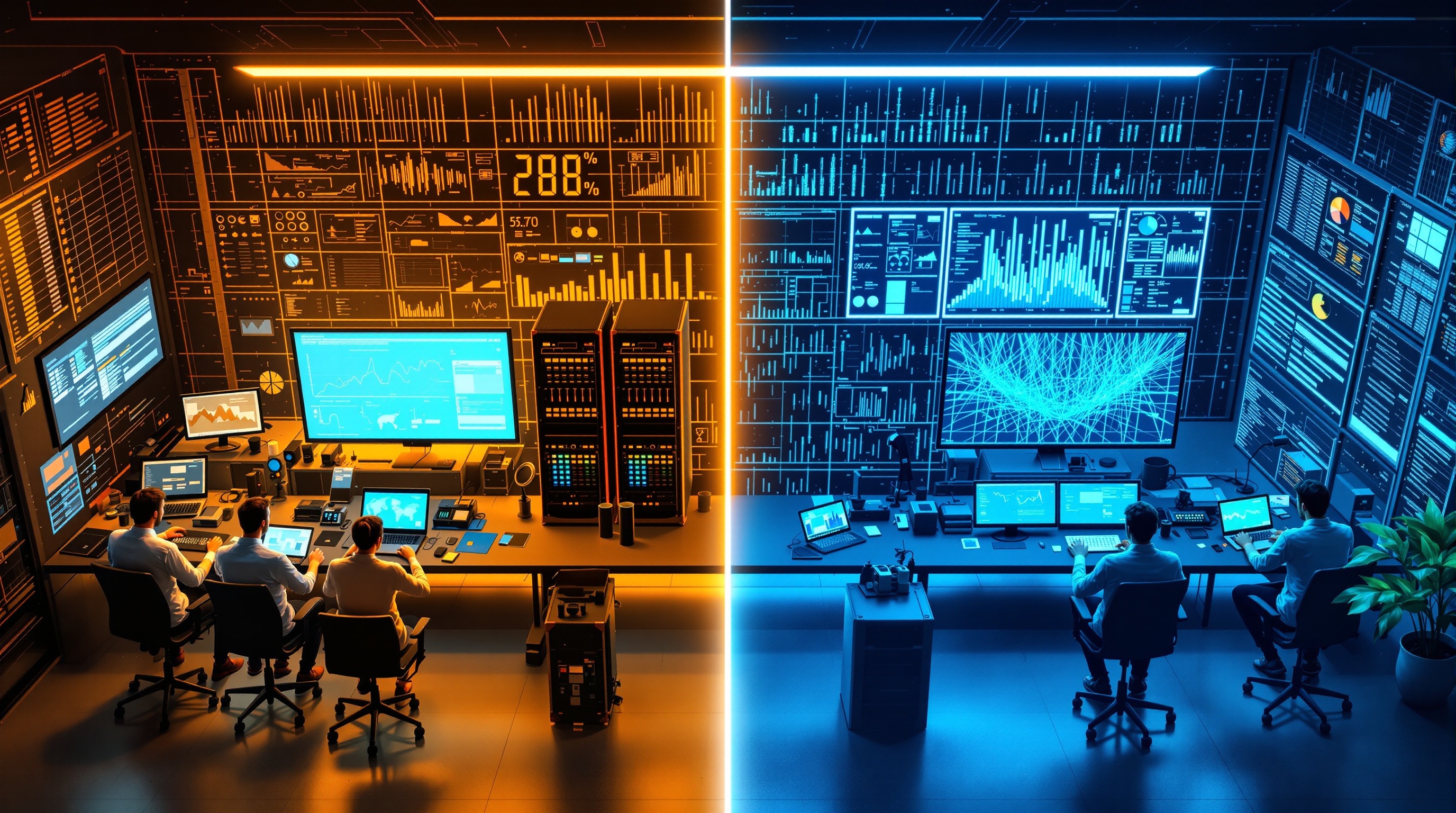
Choose traditional machine learning when you have structured data, limited computational resources, need to explain your model’s decisions, or are working with smaller datasets under 100,000 examples. Go with deep learning when you’re processing unstructured data like images, audio, or text, have access to large datasets with millions of examples, can afford the computational costs, and the accuracy improvement justifies the complexity. The decision ultimately comes down to matching your project constraints—data volume, budget, timeline, and explainability requirements—with the strengths of each approach.
Here’s a practical decision framework based on what we’ve seen work:
Use traditional machine learning when:
- Your data is structured and tabular (spreadsheets, databases)
- You have fewer than 100,000 training examples
- You need to explain why the model made a specific decision (for regulatory compliance or stakeholder buy-in)
- Your team doesn’t have specialized deep learning expertise
- You’re working with a limited budget or standard computing hardware
- Quick iteration and experimentation matter more than squeezing out every percentage point of accuracy
Use deep learning when:
- You’re working with unstructured data (images, video, audio, natural language)
- You have at least hundreds of thousands of training examples, ideally millions
- The problem involves complex pattern recognition that’s hard to define with features
- You have access to GPUs or cloud computing resources
- Maximum accuracy is critical and worth the extra cost and complexity
- You’re building consumer-facing applications like image recognition or voice assistants
Real-world example: A retail company wants to predict which customers will buy next month. They have purchase history, demographics, and browsing data for 50,000 customers in a database. Traditional machine learning (like XGBoost or random forests) is perfect here. It’ll train in minutes, achieve strong accuracy, and the marketing team can understand which factors drive purchases.
Same retail company wants to automatically tag product images so customers can search by visual similarity. Now they need deep learning. The raw pixel data doesn’t translate to simple features, and they have millions of product photos to learn from. The added complexity is worth it because traditional machine learning can’t handle this task well.
The industry data backs this up. The AI in retail market is forecasted to grow from $9.97 billion in 2023 to $54.92 billion by 2033, with companies using both approaches depending on the specific application.
Here’s what most guides won’t tell you: start simpler than you think you need to. We’ve seen countless projects at Jasify where teams jumped straight to deep learning because it seemed more advanced, only to realize a simpler machine learning model would have worked better. Deep learning is powerful, but it’s also expensive to build, slow to iterate on, and hard to debug when something goes wrong.
Try this approach instead: start with the simplest method that could possibly work, measure its performance, then only increase complexity if you really need to. Sometimes a basic machine learning model gets you 85% of the way there in a week, while a deep learning model might get you to 90% after three months of work. Is that extra 5% worth it for your business? Sometimes yes, often no.
If you’re building AI systems that need to scale and integrate with your existing infrastructure, specialized expertise helps. Databricks and MLOps experts can help you set up the right architecture whether you’re using traditional machine learning or deep learning approaches.
How Jasify Supports Machine Learning and Deep Learning Projects
At Jasify, we’ve worked with teams at every stage of their AI journey—from startups testing their first models to enterprises scaling deep learning systems. One pattern we’ve noticed: the biggest bottleneck isn’t choosing between machine learning and deep learning, it’s having the right infrastructure and expertise to implement either approach effectively. That’s why we connect businesses with specialized MLOps and AI engineering experts who can help you build production-ready systems, whether you’re deploying traditional machine learning models or complex neural networks. The right setup—with proper data pipelines, model versioning, and monitoring—matters more than the algorithm choice for most real-world applications.
Editor’s Note: This article has been reviewed by Jason Goodman, Founder of Jasify, for accuracy and relevance. Key data points have been verified against Itransition’s Machine Learning Statistics and industry research. The Jasify editorial team performs regular fact-checks to maintain transparency and accuracy.