

Search Engine Optimization (SEO) is the practice of optimizing website content to rank higher in traditional search engine results like Google and Bing. It works by aligning content with what people are actively searching for, using keywords, technical improvements, and link building to increase organic visibility. SEO matters because most online experiences start with search—whether someone’s looking for a product, answer, or service. Marketers, business owners, and content creators use SEO to connect with audiences at the exact moment they’re searching. It applies across all digital content, from blog posts to product pages, helping businesses get found without paying for ads.
At its core, SEO is about understanding what your audience wants and making sure search engines can find, understand, and recommend your content. That means writing for humans first, but structuring content so algorithms can parse it easily.
There are three main pillars: on-page SEO (optimizing individual pages with keywords, headers, and meta descriptions), off-page SEO (building authority through backlinks and mentions), and technical SEO (ensuring your site loads fast, works on mobile, and is crawlable). Each one supports the others.
But here’s the thing—SEO isn’t just about keywords anymore. Google’s algorithms have gotten better at understanding context and intent. So while you still need to target the right phrases, you also need to answer questions thoroughly and structure content in a way that makes sense to both readers and crawlers.
Generative Engine Optimization (GEO) is the process of optimizing content to be cited or featured in AI-generated answers from platforms like Google’s AI Overviews, ChatGPT, and Perplexity. Unlike traditional SEO, the goal isn’t just to rank in a list of blue links—it’s to have your content directly incorporated into the synthesized response users see. This matters because more people are getting answers directly from AI instead of clicking through to websites. Content strategists and forward-thinking businesses use GEO to ensure their expertise shapes the answers audiences receive, positioning them as authoritative sources even when users don’t visit their site.
GEO represents a shift in how visibility works online. With traditional search, success meant appearing on page one. With generative AI, success means being the source the AI pulls from and cites.
The rise of AI-powered search is happening fast. 78% of organizations now use AI in at least one business function, up from 55% just a year earlier. That includes how they search for and consume information. As AI answers become the default, businesses that optimize for citation—not just ranking—will maintain visibility.
What makes content “citation-worthy” to an AI? Clarity, structure, and authority. AI systems prefer content that directly answers questions, backs claims with data, and demonstrates expertise. That’s why E-E-A-T (Experience, Expertise, Authoritativeness, Trustworthiness) has become even more critical. If you want to learn more about optimizing for AI-driven search, our guide on what Generative Engine Optimization is and how it works breaks down proven tactics in detail.
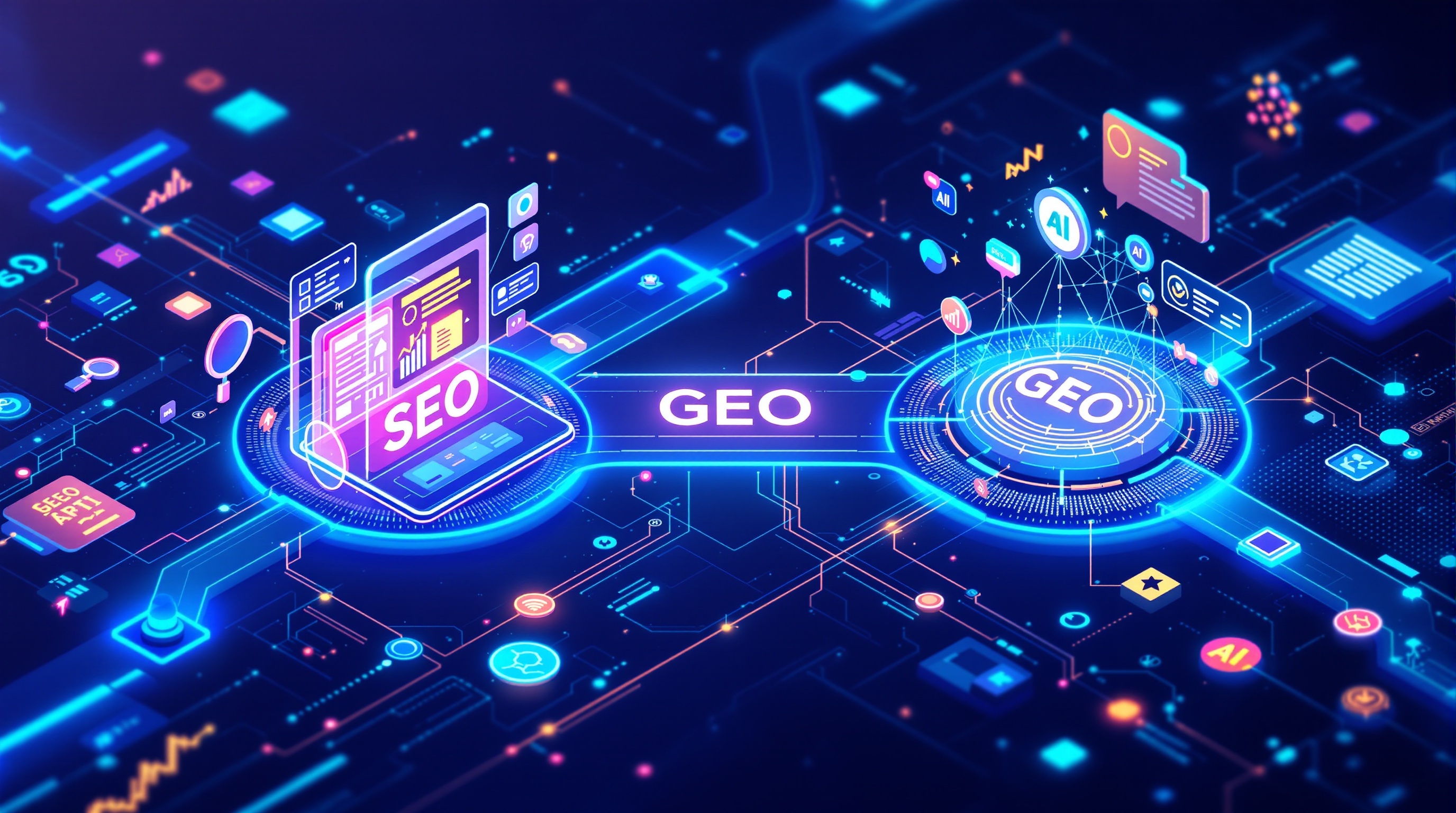
The fundamental difference between GEO and SEO lies in the end goal and how success is measured. SEO focuses on ranking high in search results to drive clicks and traffic to your site. GEO focuses on being cited within AI-generated answers, even if users never click through. SEO relies on keywords, backlinks, and technical optimization to improve placement. GEO prioritizes structured, conversational content that directly answers questions with verifiable facts. While SEO tracks rankings and organic traffic, GEO measures citations, mentions, and how often your brand appears in AI responses. Both aim for visibility, but they reach users at different points in the information journey.
Here’s a practical breakdown of how they differ in execution:
| Aspect | SEO | GEO |
|---|---|---|
| Primary Goal | Rank on page one to drive clicks | Be cited in AI-generated answers |
| Traffic Model | Users click through to your site | Users may get answers without visiting |
| Content Style | Keyword-focused, structured for crawlers | Conversational, answer-first, citation-ready |
| Key Metrics | Rankings, organic traffic, bounce rate | Citations, AI mentions, brand authority |
| Optimization Focus | Backlinks, technical SEO, keyword density | E-E-A-T signals, schema markup, structured data |
Think of it this way: SEO gets you on the map. GEO gets you into the conversation.
Another key difference is how each approach handles keywords. Traditional SEO still revolves around targeting specific phrases and building content around them. GEO requires thinking in questions and natural language—how would someone ask this out loud? AI systems are trained on conversational data, so content that mirrors how people actually talk tends to get cited more often.
And while backlinks still matter for SEO, GEO places more weight on the credibility of your sources. Citing reputable studies, linking to authoritative organizations, and backing up claims with data all increase your chances of being referenced by AI.
Optimizing for GEO requires shifting from keyword-centric writing to answer-centric writing. Your content needs to directly address user questions in the first 100 words, using clear, structured language that AI can easily parse and quote. This means leading with concise definitions, supporting claims with cited data, and organizing information with headers, lists, and schema markup that help AI understand context. Prioritizing E-E-A-T signals—demonstrating experience, expertise, authority, and trustworthiness—becomes essential. Content that educates, cites sources, and provides unique insights stands a better chance of being featured in AI Overviews than generic SEO content written primarily for keyword placement.
AI systems prefer straightforward answers. If your content takes three paragraphs to get to the point, it’s less likely to be cited. Start each section with a clear, self-contained answer that could stand alone. Then expand with details.
For example, instead of writing “There are many benefits to using AI in marketing,” try: “AI helps marketers automate repetitive tasks, personalize customer experiences, and analyze data faster than manual methods.” The second version is specific and quotable.
Schema markup helps AI understand what your content is about. Tagging content as a FAQ, how-to guide, or article with structured data increases the chances of being pulled into AI Overviews. Google’s AI relies on this metadata to categorize and cite sources confidently.
If you’re writing a comparison or listing tools, use schema for product reviews or lists. It’s not just for search results anymore—it’s for training AI what your content represents.
One mistake we see often: businesses make bold claims without backing them up. AI systems cross-reference information and favor content that cites reputable sources. If you mention a stat, link to the study. If you reference an expert opinion, name the source.
This is also why prompt optimization matters—teaching your team or AI tools to write citation-ready content from the start. Our guide on prompt optimization covers how to craft content briefs that naturally produce GEO-friendly output.
Google’s E-E-A-T framework (Experience, Expertise, Authoritativeness, Trustworthiness) isn’t just an SEO guideline anymore—it’s central to GEO. AI systems are trained to prioritize content from credible sources. That means showing your experience matters.
Instead of writing generic advice, share what you’ve observed or learned firsthand. For example: “While most guides recommend focusing on long-tail keywords, we’ve found that businesses using AI tools from marketplaces like Jasify see better results when they optimize for conversational queries first.”
That kind of specific, experience-based insight is what separates cited content from ignored content.
You shouldn’t choose between GEO and SEO—you need both. SEO builds the foundational authority and traffic that allows your content to be discovered and trusted in the first place. GEO extends that visibility into AI-generated answers, ensuring you’re cited even when users don’t click through. Strong SEO creates the ranking signals and backlink profile that make your content credible to AI systems. GEO ensures that credibility translates into citations. Businesses should view GEO as an evolution of SEO, not a replacement. Start with solid SEO fundamentals, then layer in GEO tactics to maximize visibility across traditional search and AI-driven platforms.
Here’s the reality: if your site doesn’t rank well in traditional search, AI systems are less likely to cite you. Google’s AI Overviews pull heavily from pages that already perform well in organic search. So the work you’ve done on SEO isn’t wasted—it’s the foundation.
But if you only focus on SEO and ignore GEO, you risk becoming invisible as more users get answers directly from AI. Cisco forecasts 2026 as the year companies shift from AI operations to agentic operations, meaning AI won’t just assist—it’ll make decisions. That includes deciding which sources to cite.
If you’re building a new site or your domain authority is still low, prioritize traditional SEO first. Focus on creating comprehensive content, earning backlinks, and improving technical performance. You need that base layer of credibility before AI systems will trust your content enough to cite it.
SEO is also critical for transactional content—product pages, service pages, and anything designed to convert. People still click through for purchases, bookings, and detailed comparisons. Don’t neglect those pages in favor of GEO-only content.
If you already have strong domain authority and you’re trying to maintain visibility as search behavior shifts, GEO should be a top priority. This is especially true for informational content—guides, explainers, and thought leadership.
GEO also matters more for industries where AI-driven search is already dominant. Tech, SaaS, marketing, and consulting are seeing faster adoption of AI Overviews. If your audience is asking ChatGPT or Perplexity instead of Googling, you need to optimize for those platforms.
At Jasify, we’ve built our content strategy around this “both/and” approach. Our SEO work focuses on ranking for high-intent keywords around AI tools and marketplaces. But we also structure every piece of content to be citation-worthy—leading with clear answers, citing data, and demonstrating expertise.
For example, when we publish guides on AI for business or AI for creators, we’re not just targeting keywords. We’re writing in a way that AI systems can confidently pull from and reference. That means being specific, citing sources, and avoiding vague marketing language.
The result? We rank well in traditional search and get cited in AI-generated answers. That’s the advantage of treating GEO as an extension of SEO, not a separate discipline.

Jasify’s marketplace includes AI-powered content tools and SEO systems designed to help businesses optimize for both traditional search and AI-driven visibility. Whether you’re building SEO-focused blog content or refining your approach to get cited in AI Overviews, the AI bundles and systems available on Jasify provide automation, optimization, and data-driven insights. These tools help creators and businesses structure content for clarity, cite sources effectively, and monitor performance across both SEO and GEO metrics—making it easier to execute the “both/and” strategy outlined in this guide.
Editor’s Note: This article has been reviewed by Jason Goodman, Founder of Jasify, for accuracy and relevance. Key data points have been verified against Netguru’s AI Adoption Statistics, Simplilearn’s AI Trends Report, and Cisco’s 2026 AI Operations Forecast. The Jasify editorial team performs regular fact-checks to maintain transparency and accuracy.


Discover what an AI token is and why it matters for costs and performance. Learn practical ways to optimize token usage and reduce AI expenses in this expert guide.
Discover what is an AI platform, its core components, and how to choose the right one for your business needs. A comprehensive guide to accelerate your AI development and deployment.
Discover what an AI token is and why it matters for costs and performance. Learn practical ways to optimize token usage and reduce AI expenses in this expert guide.
Discover what is an AI platform, its core components, and how to choose the right one for your business needs. A comprehensive guide to accelerate your AI development and deployment.
Discover what an AI token is and why it matters for costs and performance. Learn practical ways to optimize token usage and reduce AI expenses in this expert guide.
Discover what is an AI platform, its core components, and how to choose the right one for your business needs. A comprehensive guide to accelerate your AI development and deployment.