

Data augmentation has emerged as a cornerstone technique in modern machine learning pipelines, transforming how AI practitioners address limited dataset challenges. By artificially expanding training datasets with modified versions of existing data, data augmentation enables models to learn more robust features and achieve better generalization performance. This comprehensive guide explores advanced data augmentation techniques for image and text data, providing practical insights for implementation across diverse machine learning applications.
Understanding Data Augmentation Fundamentals
Data augmentation is the process of artificially expanding a training dataset by creating modified or synthetic data points from original data. This technique has become essential in machine learning workflows, particularly when large, diverse real-world datasets are limited, costly to acquire, or restricted by privacy regulations.
The primary benefits of data augmentation in machine learning include enhanced model generalization, reduced overfitting, and improved performance on unseen data. By exposing models to diverse variations of training examples, augmented data generation helps neural networks learn invariant features rather than memorizing specific training instances.
Historically, data augmentation techniques evolved from simple transformations like flipping and rotating images to sophisticated generative approaches using advanced AI. The statistical improvements from implementing data augmentation are well-documented, with studies showing significant increases in model accuracy across various domains, sometimes by margins of 5-10% or more, particularly in scenarios with limited training data.
The Science Behind Data Augmentation
The theoretical foundation of data augmentation lies in its ability to better approximate the true data distribution from limited samples. Mathematically, data augmentation introduces transformations (T) that preserve class labels while expanding the support of training data to better reflect real-world variations.
Data augmentation directly addresses the bias-variance tradeoff in machine learning by increasing data diversity without introducing additional bias. This helps models achieve better generalization by reducing variance in predictions across different inputs.
Key metrics for measuring augmentation effectiveness include:
- Improved validation accuracy compared to training on non-augmented data
- Reduced gap between training and validation performance (less overfitting)
- Enhanced model robustness when tested on noisy or out-of-distribution samples
- Better performance on downstream tasks when using transfer learning with augmented datasets
Image Data Augmentation Techniques
Image data augmentation represents one of the most mature and widely adopted forms of data augmentation in machine learning. These techniques can be categorized into several groups:
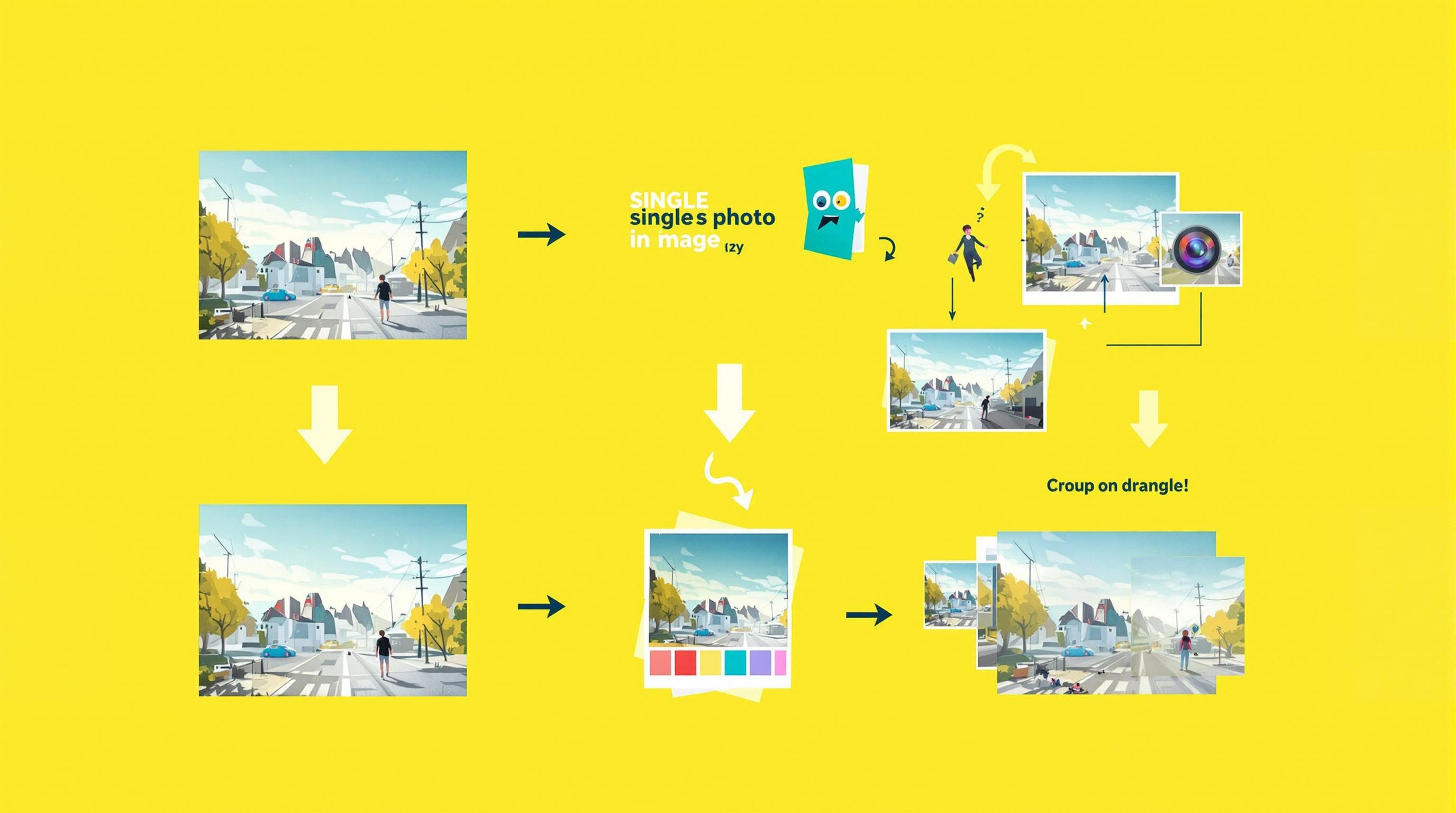
Geometric Transformations
Geometric transformations modify the spatial properties of images while preserving their semantic content:
- Rotation: Turning images by various angles (commonly 90°, 180°, 270°)
- Flipping: Horizontal or vertical mirroring of images
- Scaling: Resizing images up or down while maintaining aspect ratios
- Cropping: Extracting random portions of the original image
- Translation: Shifting images horizontally or vertically
These transformations are particularly effective for image classification tasks where the object’s orientation doesn’t affect its label.
Color Space Transformations
Color augmentations help models become invariant to lighting conditions and color variations:
– Brightness adjustments
– Contrast modifications
– Saturation changes
– Hue shifts
– Color jittering (random changes to multiple color attributes)
According to research from IBM, color space augmentations can improve model performance by 3-7% in computer vision tasks that require robustness to varying lighting conditions.
Data Augmentation for Computer Vision Tasks
Different computer vision applications require specialized augmentation approaches:
Image classification benefits from most standard augmentations, as the goal is to identify the primary object regardless of variations.
Object detection requires careful handling of augmentations to maintain bounding box integrity. When applying transformations like rotations or flips, the corresponding bounding box coordinates must be transformed accordingly. Libraries like Albumentations provide built-in support for these synchronized transformations.
Image segmentation demands that pixel-level masks undergo identical transformations as the source images. Any geometric modification applied to the input image must be precisely mirrored in the segmentation mask to preserve pixel-perfect alignment.
Real-time data augmentation during training has become standard practice in modern deep learning frameworks. Libraries like TensorFlow and PyTorch support on-the-fly augmentation, which generates new variations of training examples in each epoch, expanding the effective dataset size without increasing storage requirements.
Data Augmentation with Generative Models
Advanced generative approaches to data augmentation have revolutionized the field:
Generative Adversarial Networks (GANs) create entirely new synthetic images by learning the underlying distribution of training data. StyleGAN and BigGAN architectures have demonstrated remarkable capabilities in generating photorealistic examples that can augment existing datasets. Data augmentation with generative adversarial networks can be particularly valuable for addressing class imbalance problems.
Style transfer techniques allow the visual style from one image to be applied to another, creating novel variations while preserving content. This approach is particularly useful for domain adaptation tasks where a model must generalize across different visual styles.
Diffusion models have emerged as powerful tools for data augmentation, gradually transforming noise into realistic images through an iterative denoising process. These models often produce more diverse and higher-quality samples than earlier generative approaches.
A Lyzr AI study found that generative augmentation can outperform traditional transformation-based methods by up to 15% in scenarios with extremely limited training data, though at the cost of higher computational requirements.
Text Data Augmentation in Natural Language Processing
Text data augmentation has evolved significantly to address the unique challenges of natural language processing (NLP). Unlike image data, text must maintain semantic coherence and grammatical correctness after augmentation.
Word-level Techniques
Word-level augmentation methods modify individual tokens while preserving the overall meaning:
- Synonym replacement: Substituting words with semantically equivalent alternatives using resources like WordNet or word embeddings
- Random insertion: Adding contextually appropriate words to expand sentence length and diversity
- Random deletion/swapping: Removing or changing word positions to create syntactic variations
Sentence-level Transformations
Sentence-level techniques generate alternative expressions with equivalent meanings:
– Paraphrasing using sequence-to-sequence models
– Back-translation (translating text to another language and back)
– Sentence shuffling for tasks where order is not critical
Back-translation has proven particularly effective for text data augmentation in natural language processing, with studies showing improvements of 2-5% in classification accuracy across multiple languages and domains.
Advanced NLP Augmentation Strategies
Modern transformer-based models have enabled more sophisticated text augmentations:
Contextual augmentation uses masked language models like BERT to replace words with contextually appropriate alternatives that maintain semantic coherence.
Domain-specific augmentation techniques consider field-specific terminology and constraints. For medical or legal text, augmentations must preserve technical accuracy while introducing useful variations.
Maintaining semantic integrity during text augmentation remains challenging. Techniques such as semantic similarity filtering help ensure that augmented examples retain their original meaning and class associations.
For low-resource languages with limited training data, cross-lingual transfer approaches can be combined with augmentation to improve performance significantly.
Data Augmentation for Specialized Data Types
Beyond images and text, data augmentation techniques have been adapted for various specialized data types:
Audio Data Augmentation
Audio augmentation techniques enhance speech recognition and audio classification systems:
– Pitch shifting to simulate different speakers
– Time stretching/compression to modify speaking rates
– Adding background noise to improve robustness
– Frequency masking to simulate channel variations
Time Series Data Augmentation
Time series data benefits from specialized temporal augmentations:
– Window warping (stretching or compressing segments)
– Magnitude warping (scaling amplitude)
– Permutation within defined windows
– Synthetic data generation using generative models
Tabular Data Augmentation
Structured tabular data presents unique challenges for augmentation:
- SMOTE (Synthetic Minority Over-sampling Technique) for generating synthetic samples
- Feature perturbation within realistic ranges
- GAN-based approaches specifically designed for tabular data
According to ACL Digital, appropriate data augmentation for tabular data can improve model performance by 5-12% in fraud detection and anomaly detection applications.
Implementing Data Augmentation Pipelines
Building effective data augmentation pipelines requires thoughtful implementation strategies:
On-the-fly vs. Offline Augmentation
On-the-fly augmentation generates new samples during training, saving storage space and providing potentially infinite variations. This approach is memory-efficient but adds computational overhead during training.
Offline augmentation pre-computes augmented examples and stores them before training. This front-loads computation and requires more storage but allows for faster training iterations.
Libraries and Frameworks
Several libraries facilitate data augmentation implementation:
- Albumentations: Offers fast image augmentations with support for segmentation and detection tasks
- imgaug: Provides comprehensive image augmentation options with customizable pipelines
- nlpaug: Specialized for text augmentation with character, word, and sentence-level transformations
- TorchAudio: Implements audio-specific augmentations integrated with PyTorch
- TensorFlow Data: Supports efficient data augmentation pipelines within TensorFlow
Best practices for augmentation pipelines include applying transformations stochastically (random selection and parameters), maintaining label consistency, and validating augmented examples to ensure they remain realistic and meaningful.
Data Augmentation in Deep Learning
Deep learning models present specific considerations for data augmentation implementation:
Convolutional Neural Networks (CNNs) benefit greatly from spatial augmentations that reinforce translation invariance, while transformers may require different augmentation strategies focused on semantic variations.
Transfer learning scenarios often combine augmentation with fine-tuning. Pre-trained models can leverage data augmentation to adapt to new domains with limited data, achieving performance comparable to models trained on much larger datasets.
Data augmentation impacts model convergence by effectively increasing dataset size and diversity. However, excessive or inappropriate augmentation can destabilize training by introducing unrealistic examples. Balancing augmentation complexity with model capacity is essential for optimal results.
Industry Applications and Case Studies

Data augmentation has demonstrated significant impact across multiple industries:
Medical Imaging and Healthcare
In medical imaging, where data collection is constrained by patient privacy and availability, data augmentation for medical imaging has become essential. Techniques like elastic deformations and synthetic lesion generation help train diagnostic models with limited samples.
A case study from Lyzr AI showed that advanced augmentation techniques improved cancer detection accuracy by 14% in scenarios with fewer than 1,000 training images.
Financial Analysis
Financial institutions apply data augmentation for anomaly and fraud detection, addressing the inherent imbalance between normal and fraudulent transactions. Synthetic minority oversampling and GAN-based approaches help create realistic fraud examples without compromising sensitive financial data.
Autonomous Systems
Self-driving vehicles and robotics rely heavily on augmented data to prepare for rare but critical scenarios. Simulated environmental conditions and synthetic obstacle variations help train models to handle edge cases without requiring dangerous real-world testing.
Emerging Trends and Future Directions
The field of data augmentation continues to evolve with several promising directions:
Self-supervised data augmentation approaches use augmentation itself as a learning signal. Contrastive learning methods like SimCLR and MoCo leverage pairs of augmented images to learn representations without requiring labels.
Automated augmentation policy learning techniques like AutoAugment and Population Based Augmentation (PBA) optimize augmentation strategies automatically, outperforming hand-designed policies.
Domain-specific augmentation techniques continue to emerge for specialized fields, with physics-informed augmentations for scientific data and privacy-preserving augmentations for sensitive information.
The integration of data augmentation with semi-supervised and unsupervised learning approaches represents a particularly promising direction, enabling models to leverage both labeled and unlabeled data more effectively.
Practical Guidelines for Effective Data Augmentation
To maximize the benefits of data augmentation, consider these practical guidelines:
- Select domain-appropriate techniques: Choose augmentations that reflect realistic variations in your specific problem domain
- Validate augmented examples: Regularly inspect augmented samples to ensure they remain realistic and maintain label integrity
- Balance diversity and realism: Aim for diverse augmentations without creating examples that cross class boundaries or appear unrealistic
- Measure impact systematically: Use ablation studies to quantify the contribution of different augmentation techniques
- Consider computational trade-offs: Balance augmentation complexity with available computational resources
Common pitfalls to avoid include excessive augmentation leading to unrealistic examples, applying inappropriate transformations for your domain, and neglecting to synchronize augmentations for complex tasks like object detection.
Conclusion
Data augmentation has evolved from a simple technique to address limited data to a sophisticated methodology that fundamentally enhances how machine learning models learn and generalize. By strategically applying the advanced data augmentation techniques outlined in this guide, practitioners can significantly improve model performance across diverse domains.
Whether working with image data augmentation, text data augmentation, or specialized data types, the principles remain consistent: expand your effective dataset size, increase diversity while maintaining realism, and ensure augmentations reflect variations that models will encounter in real-world applications.
As machine learning continues to advance, data augmentation will remain a critical component of successful AI implementations, enabling more robust, generalizable, and effective models even when faced with data constraints.
Trending AI Listings on Jasify
- Custom 24/7 AI Worker – Automate Your Business with a Personalized GPT System – Perfect for implementing AI-based data augmentation workflows in business processes requiring automated model training.
- High-Impact SEO Blog – 1000+ Words (AI-Powered & Rank-Ready) – Useful for creating content about data augmentation techniques that ranks well in search engines.
- Custom AI Product Recommendation Chatbot (Built for Your Health Brand) – Can be trained on augmented datasets to provide more robust product recommendations.
