
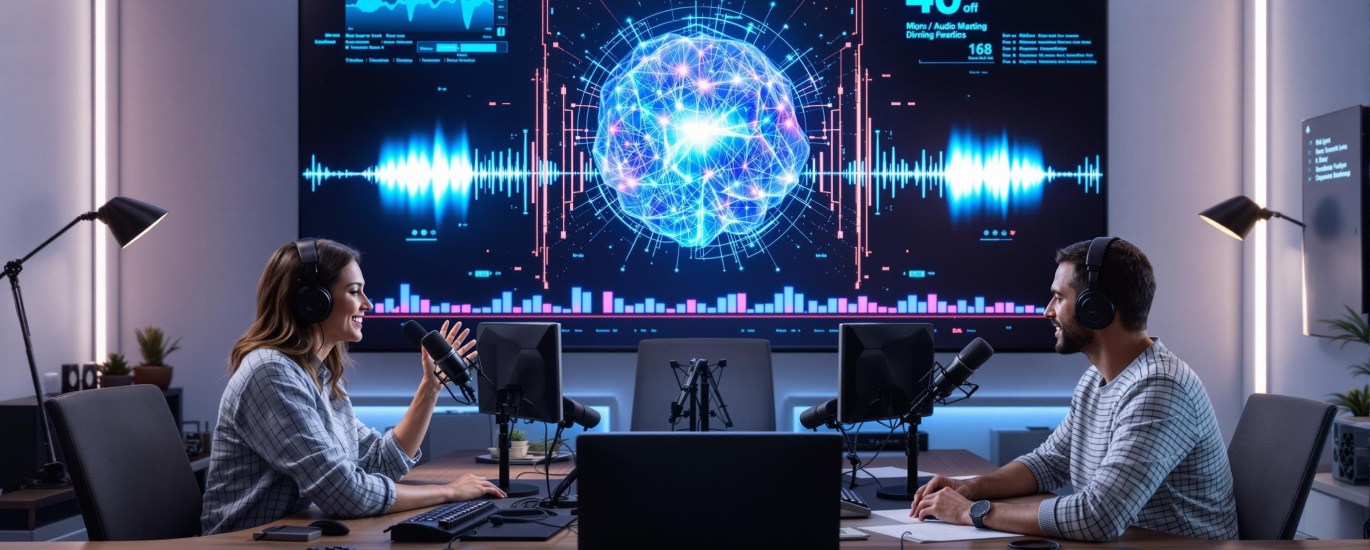
AI Podcasting Revolution: 7 Editing Tools for Creating High-Quality Audio Content with Lifelike Voices
Introduction to AI-Powered Podcasting
The podcasting landscape has undergone a remarkable transformation in recent years, with artificial intelligence emerging as a game-changing force in content creation and production. As of 2023, there were over 1 million active podcasts worldwide, with a significant surge in podcast consumption during the COVID-19 pandemic (Podigee). This explosion in popularity has created both opportunities and challenges for content creators seeking to produce professional-quality audio without extensive technical expertise.
AI podcasting represents the cutting edge of this digital media revolution. By leveraging sophisticated algorithms and machine learning, these tools are democratizing podcast creation, making it accessible to creators at all skill levels. The global podcasting market continues to expand rapidly, driven by AI technologies that streamline the production process and enhance content quality (Solveo).
For podcasters, AI offers solutions to longstanding challenges in the podcasting workflow. From automated editing and background noise removal to synthetic voices that sound remarkably human, these technologies are transforming how audio content is created, edited, and distributed. Whether you’re a solo creator working from home or a professional studio team, AI tools can significantly reduce editing time while improving the overall listening experience for your wider audience.
The Evolution of Podcast Editing Technology
Traditional podcast production involved numerous technical hurdles. Creators often struggled with inconsistent audio levels, distracting background sounds, and the tedious process of manual editing. Even simple podcasts could require hours of post-production work to achieve professional sound quality.
The shift from manual editing to automated solutions marks a pivotal moment in podcasting history. AI-powered tools now handle tasks that once demanded specialized audio engineering skills. This evolution has particularly benefited content creators who can focus more on developing compelling content rather than getting bogged down in technical details (Boomcaster).
Modern AI editing systems analyze audio tracks with remarkable precision, identifying issues that might escape human detection. They can automatically balance audio levels between multiple speakers, remove unwanted background noise, and even suggest edits to improve the flow of conversation. For novice podcasters, these tools provide an accessible entry point into professional-quality production. For experienced hosts, they significantly reduce editing time while maintaining—or even enhancing—content quality.
7 Revolutionary AI Podcasting Tools for Professional Audio Editing
-
Adobe Podcast
Adobe Podcast has quickly established itself as a leading AI podcasting tool, offering sophisticated audio enhancement capabilities powered by artificial intelligence. The platform’s standout feature is its remarkable ability to transform raw recordings into professional-sounding podcast audio files.
Key features include:- Advanced speech enhancement that makes voices sound clear and professional
- Intelligent background noise removal that can clean up audio recorded in less-than-ideal environments
- Automated transcription for creating podcast transcripts and improving content accessibility
- Studio-quality sound processing that simulates professional recording environments
Adobe Podcast offers flexible pricing options that scale with user needs, making it accessible for both independent podcasters and professional studios. The platform’s integration with other Adobe Creative Cloud tools also makes it an attractive option for creators already invested in the Adobe ecosystem (Podigee).
-
Descript
Descript revolutionizes the podcasting process with its innovative text-based approach to audio editing. This all-in-one platform allows podcasters to edit audio by simply editing the transcript—a game-changer for the editing process.
Standout capabilities include:- Text-based audio editing that allows users to remove filler words and edit audio simply by deleting text
- Voice cloning technology that creates custom voices for consistent narration
- Seamless integration with major podcast platforms for streamlined distribution
- Collaborative features that allow multiple team members to work on podcast episodes simultaneously
Perhaps most revolutionary is Descript’s Overdub feature, which uses AI to generate lifelike voices based on recordings of real speakers. This technology enables creators to make script changes without re-recording, saving significant editing time in the podcast creation process. The platform offers varying subscription levels to accommodate different podcasting needs and budgets (Descript).
-
Auphonic
Auphonic specializes in automated audio post-production, focusing on creating consistently balanced sound across entire podcast episodes. This tool is particularly valuable for podcasts featuring multiple speakers or those recorded in varying acoustic environments.
Key features include:- Intelligent audio leveling that ensures consistent volume throughout episodes
- Adaptive noise reduction that minimizes background noise without affecting voice quality
- Support for multiple audio formats and easy integration with popular podcast hosting services
- Batch processing capabilities for handling multiple audio files simultaneously
Auphonic’s algorithm analyzes the entire audio track to make smart adjustments that maintain natural sound while improving clarity. The platform offers both web-based and standalone options, with pricing based on processing time rather than a standard subscription model, making it flexible for podcasters with varying production schedules (Solveo).
-
Monica AI Podcast Generator
The Monica AI Podcast Generator represents a breakthrough in content repurposing, allowing creators to transform written materials into podcasts with ultra-realistic voice options. This tool is particularly valuable for businesses and content creators looking to expand their reach across different media formats.
Notable features include:- Natural-sounding, polished podcasts generated from text inputs
- Multiple synthetic voices with customizable speech patterns and inflections
- Efficient conversion of blog posts, articles, and other written content into audio formats
- Multilingual capabilities for reaching a broader audience
The platform’s voice technology creates remarkably lifelike speech that avoids the robotic quality often associated with AI voices. This opens new possibilities for consistent content production without the need for studio recording sessions, particularly beneficial for creators looking to scale their podcasting output without proportionally increasing production time (Boomcaster).
-
Podcastle
Podcastle offers a virtual recording studio platform enhanced by AI capabilities, making it particularly valuable for podcasts with remote guests. The platform combines high-quality recording with intelligent editing tools to create a seamless production experience.
Key capabilities include:- Studio-quality remote recording that captures each speaker on separate audio tracks
- AI-powered editing tools that enhance vocal clarity and remove unwanted sounds
- Automated transcription for creating searchable podcast transcripts
- Content repurposing features that generate promotional clips for social posts
Podcastle’s strength lies in its comprehensive approach to the podcasting workflow, from initial recording through post-production. The platform’s intuitive interface makes it accessible to beginners while offering enough advanced features to satisfy experienced podcasters seeking to improve their production quality and efficiency (Podigee).
-
Cleanvoice
Cleanvoice addresses one of the most time-consuming aspects of podcast editing: removing filler words, awkward pauses, and verbal stumbles. This specialized tool focuses exclusively on cleaning up speech to create more professional and engaging podcast episodes.
Notable features include:- Automated detection and removal of “um,” “uh,” and other filler words
- Intelligent silence detection that maintains natural conversation flow
- Preservation of natural speech patterns while eliminating distractions
- Integration capabilities with broader podcasting workflow tools
By automating this tedious aspect of editing audio, Cleanvoice significantly reduces post-production time while improving the listening experience. The technology is sophisticated enough to distinguish between intentional pauses that add emphasis and awkward silences that detract from the content quality (Solveo).
-
Ausha Intelligence
Ausha Intelligence focuses on the distribution and marketing aspects of podcasting, using AI to maximize audience engagement and growth. This platform helps podcasters optimize their content for discovery and audience development.
Key features include:- AI-optimized podcast metadata to improve discoverability on podcast platforms
- Automated clip generation for social media promotion and engagement
- Advanced analytics that provide insights into listener behavior and preferences
- Smart scheduling tools that optimize publishing times based on audience data
What sets Ausha Intelligence apart is its focus on the promotional aspects of podcasting. While many tools concentrate on production, Ausha helps creators maximize the reach and impact of their content through data-driven distribution strategies, addressing a critical need in the increasingly competitive podcasting landscape (Boomcaster).
Transforming Podcast Production with Lifelike Voices
The technology behind AI-generated speech has advanced dramatically in recent years. Modern synthetic voices can replicate human speech patterns, including natural inflections, emotional tones, and even breathing patterns. These lifelike voices are transforming podcast production by offering flexibility and consistency not possible with traditional recording (Descript).
Applications for this technology include:
- Creating consistent host voices that maintain the same sound quality across episodes
- Developing multiple character voices for narrative podcasts without requiring different voice actors
- Enabling content creators to produce podcasts in languages they don’t speak fluently
- Allowing hosts to update or correct content without noticeable audio differences
Despite these advantages, ethical considerations remain important when using AI voices in podcasting. Transparency with audiences about the use of synthetic voices helps maintain trust, and many creators opt for a hybrid approach—using their own voices for main content while leveraging AI for introductions, transitions, or supplementary segments. This balance allows podcasters to benefit from the technology while maintaining authentic podcast conversation elements that audiences value (Podigee).
Optimizing Your Podcasting Workflow with AI Tools
Creating an efficient podcasting workflow with AI assistance requires strategic integration of various tools. The most successful podcasters typically combine multiple AI solutions to address different aspects of production while maintaining creative control over the final output.
A streamlined AI-enhanced workflow might include:
- Recording raw audio with a tool like Podcastle that captures clean separate tracks for each speaker
- Processing the audio through Cleanvoice to remove filler words and verbal stumbles
- Using Adobe Podcast or Auphonic for audio enhancement and leveling
- Generating transcripts with Descript for accessibility and content repurposing
- Creating promotional clips with Ausha Intelligence for marketing
The key to success lies in understanding which aspects of your podcasting process benefit most from automation versus those requiring your personal touch. By strategically deploying AI tools where they add the most value, podcasters can significantly reduce editing time while maintaining—or even enhancing—the unique qualities that make their content compelling (Solveo).
AI-Enhanced Podcast Engagement and Distribution
Beyond production, AI is revolutionizing how podcasts connect with audiences. Advanced algorithms can analyze content to generate compelling titles, descriptions, and keywords that improve discoverability on podcast platforms and search engines.
AI-powered engagement strategies include:
- Automated transcription that makes podcast content searchable and accessible to wider audiences
- AI-generated titles and descriptions optimized for search engines and podcast directories
- Smart clip generation that identifies and extracts the most engaging moments for social media posts
- Personalized recommendations that help listeners discover relevant episodes based on their interests
These tools collectively enhance the visibility and accessibility of podcast content, helping creators reach broader audiences without requiring extensive marketing expertise. By analyzing engagement metrics, AI can also provide insights into audience preferences, helping podcasters refine their content strategy based on data rather than assumptions (Boomcaster).
The Future of AI in Podcasting
The future of podcasting will likely see even deeper integration of artificial intelligence across all aspects of production and distribution. Emerging trends suggest several exciting developments on the horizon:
- Increasingly sophisticated voice synthesis that becomes indistinguishable from human speech
- Real-time voice translation that removes language barriers for global podcast distribution
- Dynamic content personalization that tailors episodes to individual listener preferences
- Advanced audio processing that creates immersive, spatial audio experiences
These innovations will continue to democratize podcast creation, making high-quality audio content production accessible to an even wider range of creators. However, as the technology advances, the podcasting community will need to address important questions about authenticity, disclosure, and the balance between automation and human creativity (Podigee).
The most successful podcasters of the future will likely be those who embrace AI as a powerful tool while maintaining the human elements of storytelling and connection that audiences value. The art of compelling storytelling remains fundamentally human, even as AI handles more of the technical aspects of production.
Conclusion: Getting Started with AI Podcast Editing
The AI podcasting revolution has created unprecedented opportunities for creators at all levels to produce professional-quality audio content. By leveraging these powerful tools, podcasters can focus more on developing compelling content and less on technical production challenges.
For those new to AI podcast editing, consider starting with user-friendly tools like Adobe Podcast or Descript that offer intuitive interfaces and comprehensive feature sets. More experienced producers might explore specialized tools like Auphonic for advanced audio processing or experiment with synthetic voices for consistent narration.
Key takeaways for maximizing your AI podcasting journey:
- Start with one or two tools that address your biggest production challenges
- Experiment with different AI solutions to find the combination that best supports your unique workflow
- Maintain a balance between automation and creative input
- Stay informed about emerging technologies through AI tools resources and podcasting communities
As AI technology continues to evolve, the barriers to creating high-quality audio content will continue to fall, opening the world of podcasting to even more diverse voices and perspectives. By embracing these tools while maintaining focus on compelling storytelling and audience connection, creators can ride the wave of the AI podcasting revolution toward greater creative freedom and audience engagement.
