
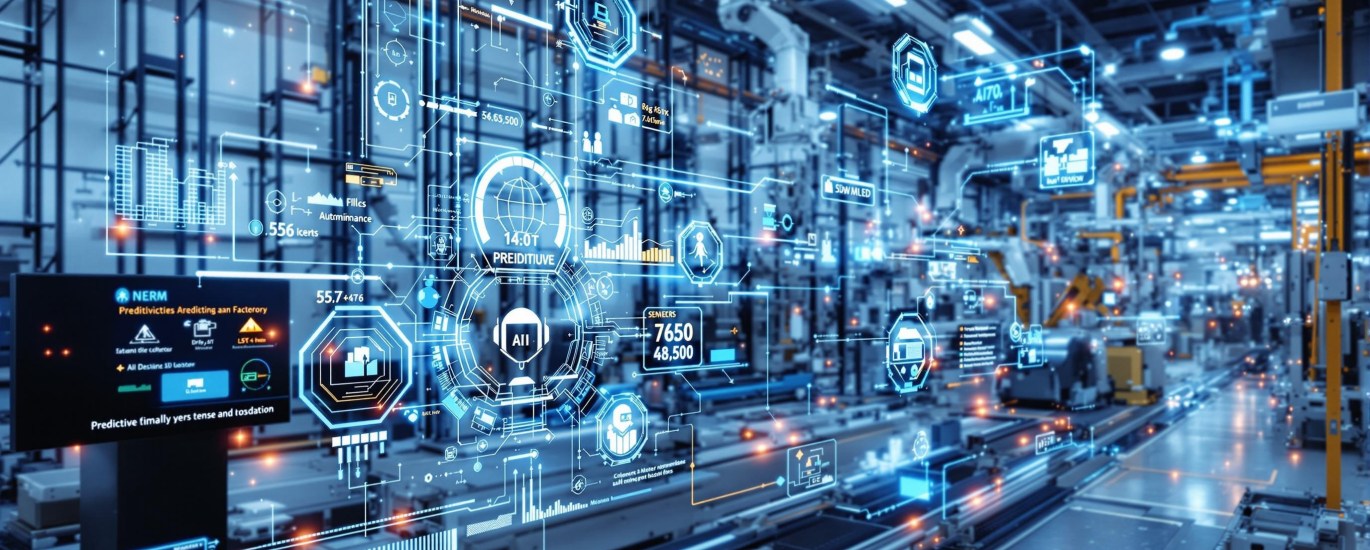
The integration of AI in manufacturing is transforming traditional production facilities into highly efficient smart factories. This digital transformation is redefining industry standards, enabling unprecedented levels of automation, efficiency, and innovation. From predictive maintenance systems that anticipate equipment failures to advanced industrial automation that streamlines production processes, AI is becoming the cornerstone of modern manufacturing within Industry 4.0.
Understanding the Evolution of Manufacturing with Industry 4.0
Industry 4.0 represents the fourth industrial revolution characterized by the integration of cyber-physical systems, Internet of Things (IoT), cloud computing, and artificial intelligence in manufacturing environments. This convergence creates interconnected, data-driven production facilities known as smart factories where AI plays a central role in analyzing massive data sets and optimizing processes in real-time. Telefonica Tech
The manufacturing sector has evolved dramatically from its origins. The journey began with manual production, progressed to mechanized factories during the first industrial revolution, advanced to electrically-powered mass production in the second, and introduced digital controls and automation in the third. Now, with Industry 4.0, we’re witnessing the rise of smart factories that leverage AI-enabled decision-making, predictive maintenance, and autonomous operations. Deloitte’s research
According to Deloitte’s research, by 2025, approximately 91% of US manufacturers will treat data as a strategic asset, compared to 78% in China and 64% in the DACH region (Germany, Austria, Switzerland). This disparity highlights varying adoption rates, with barriers in Europe including legacy IT systems and skilled workforce shortages.
The economic impact of AI in manufacturing is substantial. The global Industry 4.0 market is expected to grow from USD 102.27 billion in 2024 to USD 309.45 billion by 2032, representing a CAGR of 14.8%. Implementation of Industry 4.0 technologies can boost productivity by 20-35% and reduce downtime by up to 50%, creating compelling business cases for manufacturers worldwide. Proton Products
The Technological Foundation of Smart Factories
IoT and Connected Devices in Manufacturing
The Internet of Things forms the critical data ecosystem that powers AI applications in manufacturing. Smart sensors continuously collect real-time data from machinery, environments, and processes throughout the factory floor, creating a comprehensive digital representation of physical operations.
Modern manufacturing environments utilize various sensor technologies, including:
- Temperature sensors for monitoring equipment operating conditions
- Vibration sensors for detecting mechanical abnormalities
- Pressure sensors for fluid and pneumatic systems
- Optical sensors for precision measurements and quality control
- Proximity sensors for safety and positioning applications
These smart sensors generate continuous data streams that feed into advanced analytics systems, enabling real-time monitoring and process optimization. Major automotive manufacturers have successfully implemented comprehensive IoT sensor networks that detect anomalies and enable operational adjustments to prevent failures, demonstrating the practical benefits of connected manufacturing environments. Telefonica Tech
Cloud Computing and Edge Computing Infrastructure
Cloud platforms provide the computational power needed to process and analyze the massive volumes of data generated in manufacturing operations. These platforms support AI analytics and provide remote access to operational insights, enabling decision-making from anywhere in the world.
Edge computing complements cloud infrastructure by processing time-sensitive data locally on the factory floor. This approach minimizes latency for critical operations like robotic controls and real-time quality inspection, where even milliseconds of delay could impact production outcomes.
One significant challenge in modern manufacturing is integrating these new technologies with legacy systems. Many factories operate equipment with decades-long lifecycles, creating compatibility issues when implementing cloud and edge solutions. Data security in connected manufacturing environments presents another critical concern, as cyber-physical systems must be protected from threats that could compromise intellectual property or disrupt operations. Telefonica Tech
Predictive Maintenance: Transforming Equipment Management
Predictive maintenance represents one of the most valuable applications of AI in manufacturing. Unlike traditional reactive maintenance (fixing equipment after failure) or scheduled maintenance (servicing based on fixed intervals), predictive maintenance uses machine learning algorithms to analyze sensor data and historical records to forecast when equipment is likely to fail.
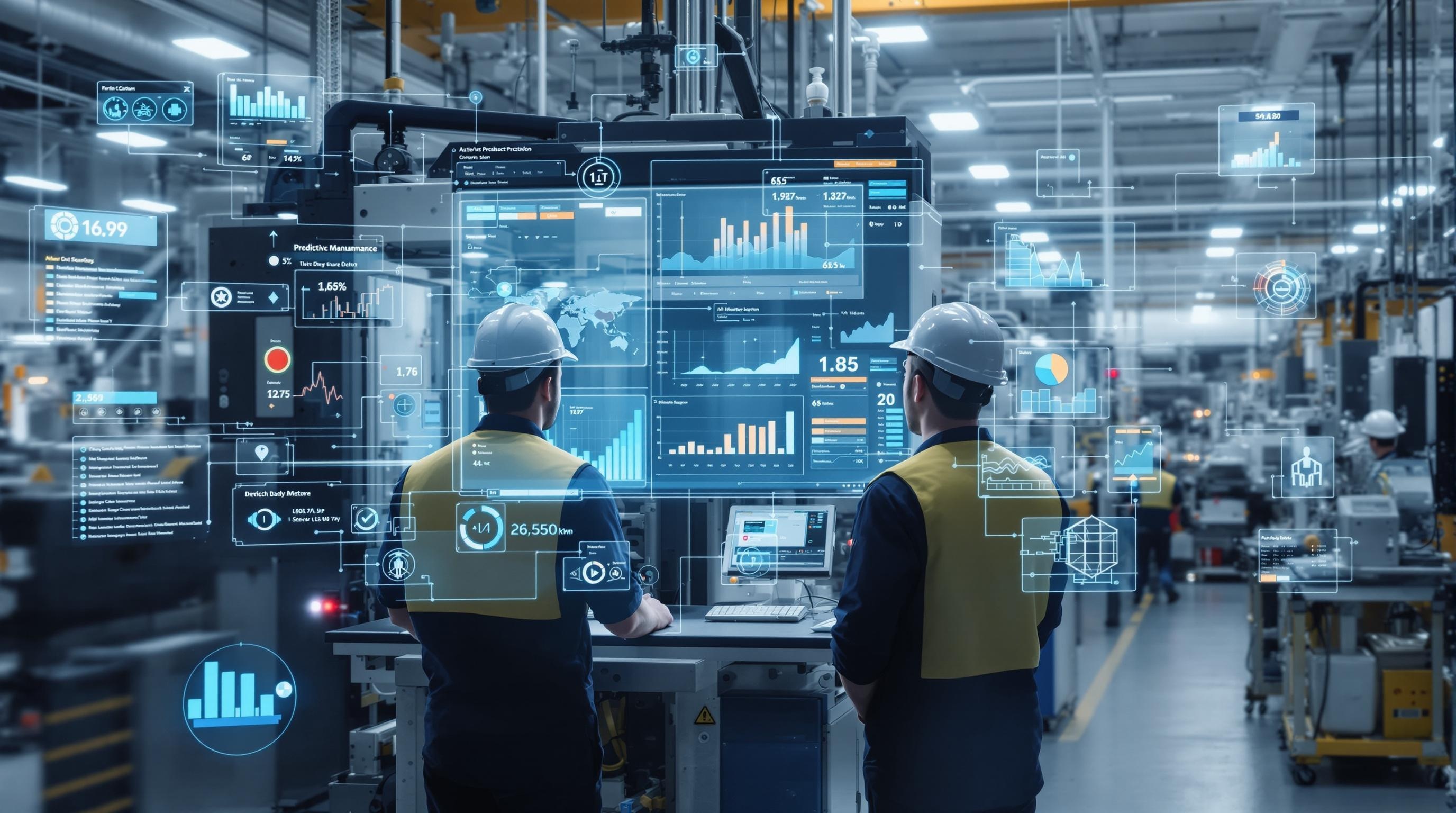
The benefits of AI-driven predictive maintenance are substantial:
- Reduction in unplanned downtime by up to 50%
- Maintenance cost savings of 10-40%
- Extended equipment lifespan through timely interventions
- Optimized spare parts inventory management
- Improved worker safety through prevention of catastrophic failures
Predictive maintenance systems typically employ supervised learning models such as Random Forest, Support Vector Machines, and Neural Networks trained on labeled failure data. These algorithms identify patterns in operational data that precede equipment failures, allowing maintenance teams to address issues before they cause production interruptions. Telefonica Tech
Real-World Case Studies in Predictive Maintenance
The automotive manufacturing sector has been at the forefront of predictive maintenance adoption. Major automotive plants have deployed vibration sensors and AI analytics to anticipate failures in critical assembly line components. According to MHP’s Industry 4.0 Barometer, manufacturers implementing these systems have achieved ROI within 6-18 months through reduced downtime and maintenance costs.
Heavy machinery sectors have similarly benefited from condition monitoring systems that continuously assess equipment health. These systems integrate sensor technology with deep learning algorithms to detect subtle changes in machine performance, often identifying potential failures weeks or months before they would become apparent through traditional monitoring methods.
While the benefits are clear, implementation challenges persist. These include the need for high-quality historical failure data, integration with existing maintenance management systems, and cultural resistance to changing established maintenance practices. Successful implementations typically involve starting with critical equipment first, building a solid data foundation, and gradually expanding the system’s scope.
Industrial Automation and Robotics
Collaborative Robots (Cobots) in Manufacturing
Collaborative robots, or cobots, represent a significant advancement in industrial automation. Unlike traditional industrial robots that operate in isolated safety cages, cobots are designed to work alongside human operators, enhancing productivity without requiring extensive physical barriers.
These robots incorporate advanced safety features, including force and torque sensors that detect contact with humans and immediately halt operation, as well as sophisticated vision systems that monitor their operating environment. This enables new human-robot collaboration protocols that leverage the strengths of both: human adaptability and decision-making combined with robotic precision and endurance.
Manufacturers implementing cobots have reported productivity improvements of 20-30%, particularly in assembly, material handling, and quality inspection tasks. The industrial robots market, including cobots, is projected to reach $265 billion by 2025, reflecting the rapid adoption of these technologies across manufacturing sectors. Telefonica Tech
Advanced Robotics and Autonomous Systems
Beyond collaborative robots, manufacturing is increasingly adopting fully autonomous systems powered by advanced AI. Machine vision systems enhanced by deep learning enable robots to identify, sort, and manipulate diverse objects with human-like perception capabilities. Self-optimizing robotic systems continually refine their operations through reinforcement learning, improving performance over time without explicit reprogramming.
These autonomous systems find applications in complex manufacturing processes like precision welding, intricate assembly, and dynamic quality control. As the technology advances, we’re moving toward fully autonomous manufacturing cells that can adapt to changing production requirements with minimal human intervention.
Quality Control and Defect Detection with Computer Vision
Computer vision powered by deep learning algorithms is revolutionizing quality control in manufacturing. These machine vision systems can inspect products at speeds and accuracy levels impossible for human operators, identifying microscopic defects in real-time production environments.
Deep learning models trained on thousands of examples can classify defects with remarkable precision, distinguishing between different types of flaws and predicting potential quality issues before they occur. Real-time quality monitoring enables immediate process adjustments to maintain production standards, reducing waste and rework.
Compared to human inspection, AI-based quality control offers several advantages:
- Consistency: AI systems don’t experience fatigue or attention lapses
- Speed: Inspections occur in milliseconds rather than seconds or minutes
- Objectivity: Decision-making based on data rather than subjective judgment
- Documentation: Automatic recording of all inspection results for traceability
According to Telefonica Tech, manufacturers implementing AI-based defect detection have reduced defect rates by 15-30% depending on the industry, with corresponding improvements in customer satisfaction and reductions in warranty claims.
Supply Chain Optimization Through AI
Artificial intelligence is transforming manufacturing supply chains through advanced analytics and process optimization. Demand forecasting using machine learning algorithms analyzes historical data, market trends, and external factors to predict future product demand with greater accuracy than traditional statistical methods.
Inventory optimization algorithms use these forecasts to determine optimal stock levels, reducing carrying costs while maintaining sufficient materials to meet production requirements. This smart supply chain integration with manufacturing processes facilitates just-in-time production strategies that minimize waste and maximize resource utilization.
Blockchain technology is increasingly applied for supply chain transparency, creating immutable records of component sourcing, manufacturing processes, and logistics. This enhances trust throughout the supply network and reduces the risk of counterfeit components entering the production process.
Real-world examples of AI-optimized manufacturing supply chains demonstrate substantial benefits, including inventory reductions of 20-50%, improved on-time delivery performance, and enhanced ability to respond to market fluctuations. These improvements directly impact manufacturing profitability and customer satisfaction.
Digital Twins and Virtual Manufacturing
Digital twin technology creates virtual replicas of physical assets, processes, or entire production facilities. These digital models are continuously updated with real-time data from their physical counterparts, enabling simulation, monitoring, and optimization in a risk-free virtual environment.

Manufacturers use digital twins to:
- Test process changes before implementation on the factory floor
- Identify optimization opportunities through scenario analysis
- Train operators in a safe virtual environment
- Troubleshoot complex issues by visualizing system interactions
Integration with real-time monitoring systems ensures that digital twins accurately reflect current conditions, making them powerful tools for operational decision-making. In product development, digital twins enable virtual prototyping that significantly reduces development cycles and improves first-time quality.
The future potential for virtual reality and augmented reality applications in manufacturing is substantial. These technologies can provide immersive interfaces to digital twins, allowing engineers and operators to visualize complex data and interact with virtual representations of physical systems in intuitive ways.
Process Optimization Using Machine Learning
Data-driven decision making represents one of the most valuable applications of AI in manufacturing. By analyzing vast amounts of production data, machine learning algorithms identify patterns and relationships that human analysts might miss, enabling continuous process improvement.
Process mining techniques automatically discover actual workflows from event logs, comparing them to intended processes and identifying deviations and inefficiencies. This provides unprecedented visibility into manufacturing operations and highlights opportunities for optimization.
Self-optimizing production lines using reinforcement learning algorithms can adjust operating parameters in real-time to maximize quality, throughput, or energy efficiency. These systems continuously experiment within safe boundaries, learning optimal settings for different products and conditions.
Energy efficiency improvements through AI optimization are particularly significant for sustainability in manufacturing. According to Proton Products, manufacturers have achieved energy consumption reductions of 10-20% through AI-controlled systems that optimize heating, cooling, compressed air, and other utilities based on production requirements.
Implementation Challenges and Solutions
Data Quality and Integration Issues
Manufacturing data often originates from heterogeneous sources with varying formats, frequencies, and quality levels. Common data challenges include inconsistent naming conventions, missing values, and noise from sensor degradation or environmental factors.
Solutions for these challenges include implementing data standardization protocols, deploying data cleaning algorithms that identify and correct anomalies, and establishing comprehensive data governance frameworks. Integration strategies for disparate systems typically involve middleware solutions that translate between different protocols and data formats.
Building the right data infrastructure for AI applications is critical. This includes selecting appropriate sensors, establishing reliable connectivity, implementing edge computing where necessary, and creating scalable data storage and processing systems that can handle the volume and velocity of big data in manufacturing environments. Telefonica Tech
Workforce Skills and Training
The skills gap represents a significant barrier to AI adoption in manufacturing. Traditional manufacturing workforces often lack the digital skills necessary to implement and maintain advanced AI systems, while technology specialists may not understand manufacturing processes and constraints.
Training approaches for existing manufacturing workforces include hands-on workshops, simulation-based learning, and mentoring programs that pair experienced operators with technology specialists. These programs focus on developing both technical skills and the ability to interpret and act on AI-generated insights.
Successful AI implementation requires effective collaboration between Information Technology (IT) and Operational Technology (OT) teams. These groups often have different priorities, terminology, and work cultures, making communication challenging. Creating cross-functional teams with members from both disciplines can bridge this gap and ensure that technology solutions address real operational needs. Deloitte’s research
The Future of AI in Manufacturing
Emerging Technologies and Trends
Cognitive computing represents the next frontier in manufacturing AI, moving beyond pattern recognition to systems that can reason, learn, and interact more naturally with human operators. These systems will support complex decision-making processes that require judgment and contextual understanding.
Quantum computing holds significant potential for solving complex manufacturing optimization problems that are intractable with classical computing methods. Applications include materials science, complex scheduling, and supply chain optimization across multiple dimensions.
Sustainable manufacturing through AI optimization is becoming increasingly important as environmental regulations tighten and consumers demand greener products. AI systems can minimize waste, reduce energy consumption, and optimize resource utilization throughout the product lifecycle, supporting smart grids and energy management systems.
The convergence of 3D printing and AI systems is enabling on-demand, customized production with minimal setup time and material waste. AI algorithms optimize part design for additive manufacturing, predict and compensate for process variations, and enable quality control for complex geometries.
5G connectivity enhances AI applications in manufacturing by providing ultra-low latency and high-speed data transmission. This enables real-time machine-to-machine communications vital for coordinating autonomous systems across the factory floor, further supporting automation software deployment across smart factory environments.
As these technologies mature, AI tools designed specifically for manufacturing applications will continue to evolve, making advanced capabilities accessible to more businesses regardless of size or technical resources.
The journey toward fully AI-powered smart factories is ongoing, with each technological advancement building upon previous innovations. Manufacturers that strategically implement these technologies now will be well-positioned to lead their industries in efficiency, quality, and innovation for years to come.
Trending AI Listings on Jasify
- AI Wellness Score & Optimization Plan – Leverages AI analysis for optimizing operational efficiency, similar to how manufacturers use predictive maintenance to optimize equipment performance.
- Short-Form Video Clipping Service – Helps document manufacturing processes and equipment maintenance procedures for training and quality control purposes.
- High-Impact SEO Blog – Ideal for manufacturers looking to document and share their AI implementation success stories and industry expertise.
