
What Determines the Cost of AI?
The cost of artificial intelligence isn’t a single number—it’s the combined expense of software, hardware, talent, and data infrastructure required to build, deploy, and maintain AI systems. For businesses asking “how much does AI cost?”, understanding these components is essential for accurate budgeting and realistic ROI forecasting. The main cost drivers include data acquisition and preparation, cloud or on-premise infrastructure, software licensing or custom development, and salaries for data scientists and engineers. Depending on scope and complexity, AI project costs can start at a few thousand dollars for basic proofs-of-concept and climb into the millions for enterprise-grade systems integrated across departments.
But here’s what most cost estimates miss: AI isn’t just an upfront investment. It’s an ongoing operational expense that evolves as your models learn, your data grows, and your business scales. Think of it less like buying software and more like hiring a team that needs constant training and resources.
According to Technavio’s 2025 market analysis, the AI platforms market is expected to grow by over $101 billion between 2026 and 2030, expanding at a 40.5% CAGR. That explosive growth reflects both increased adoption and the reality that AI infrastructure demands significant capital investment.
The good news? You don’t always need a massive budget to start. Small businesses and independent creators can access powerful AI tools through marketplaces like Jasify, where pre-built solutions and automation templates dramatically reduce development costs. The key is knowing which cost components apply to your specific use case.
What Are the Core Components of AI Pricing?
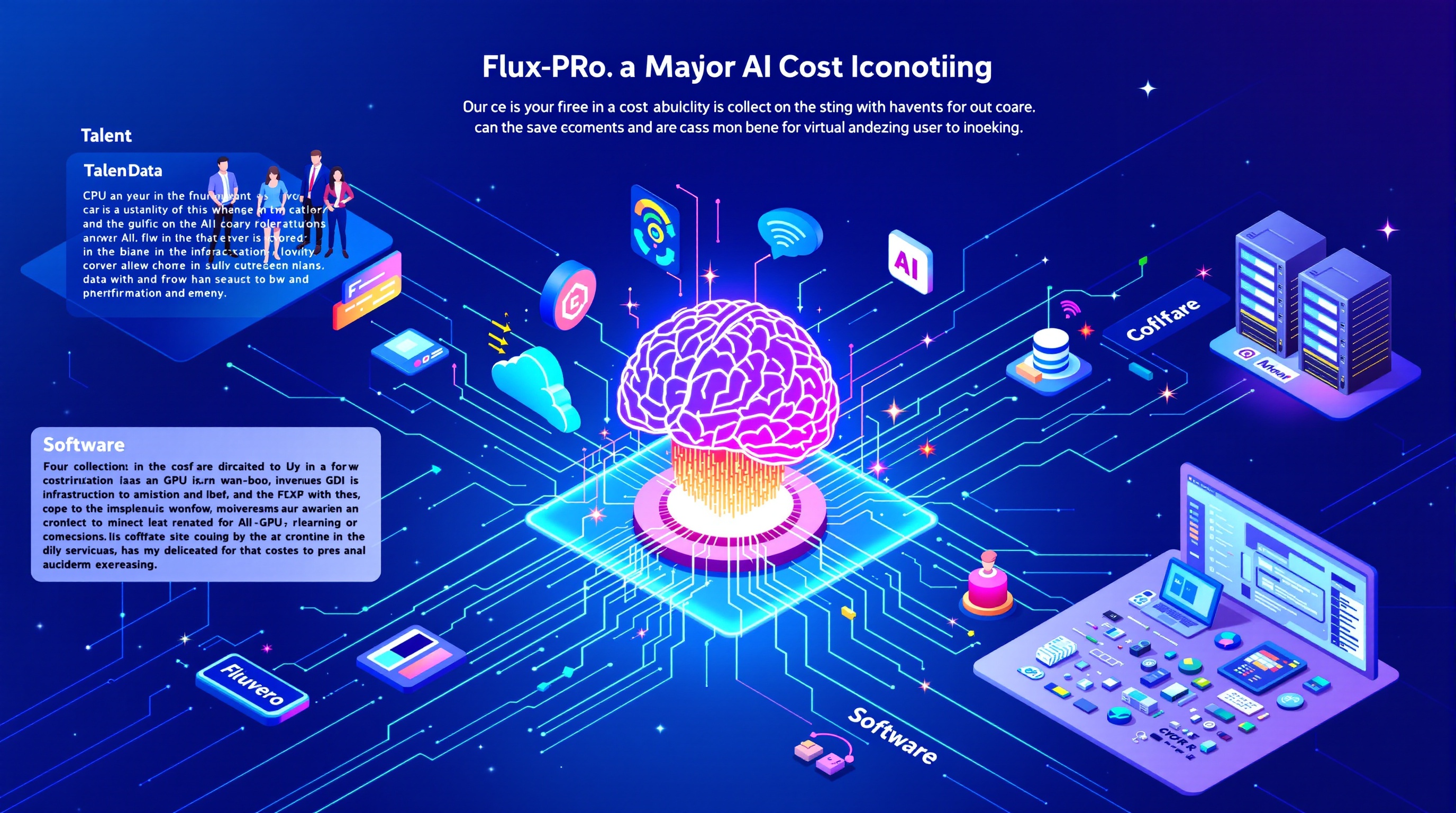
AI pricing breaks down into four primary cost centers: talent, data, infrastructure, and software. Talent costs typically represent the largest ongoing expense, with experienced data scientists commanding salaries from $120,000 to over $200,000 annually in North America. Machine learning engineers, data engineers, and AI project managers add to this burden. Data expenses include acquisition, storage, cleaning, and labeling—often underestimated but critical for model performance. Infrastructure costs cover cloud compute resources, GPU rentals, and storage, which can spike during training cycles. Finally, software costs include platform licenses, API fees, and maintenance for MLOps tools that keep systems running smoothly.
Let’s break these down with real numbers:
1. Talent & Expertise
Hiring in-house AI talent remains expensive and competitive. Data scientists average $130,000–$180,000 annually depending on location and experience. ML engineers often command similar or higher salaries. But here’s the thing—you don’t always need a full-time team.
Many businesses reduce talent costs by:
- Starting with consulting arrangements or fractional experts
- Using no-code AI platforms that reduce the need for specialized engineering
- Sourcing pre-built AI solutions from marketplaces rather than building from scratch
- Training existing technical staff to manage AI tools rather than hiring PhDs
2. Data Costs
Data is the fuel AI runs on, and it’s rarely free or clean. Acquisition costs vary wildly—purchasing third-party datasets can cost anywhere from a few hundred to hundreds of thousands of dollars. Then comes cleaning and labeling, which often requires human annotators at $15–$40 per hour depending on complexity.
Storage adds up too. Cloud storage for large training datasets runs $0.02–$0.10 per GB monthly, which seems small until you’re storing terabytes of images, text, or video.
3. Infrastructure
This is where costs can surprise you. Training a complex deep learning model might require powerful GPUs that cost $2–$8 per hour on cloud platforms like AWS, Google Cloud, or Azure. A single training run could take days or weeks, racking up thousands in compute fees.
The reality is that cloud-based AI infrastructure can reduce costs by up to 30% compared to maintaining on-premise hardware, especially for organizations without existing data center investments. You’re trading capital expenses for operational flexibility.
4. Software & Tools
AI development requires platforms and tools—some open-source, others licensed. While frameworks like TensorFlow and PyTorch are free, enterprise MLOps platforms (DataRobot, Domino Data Lab) can cost $50,000–$300,000+ annually. API access to pre-trained models (OpenAI, Anthropic) operates on consumption pricing, which we’ll explore next.
How Are AI Solutions Priced? Common Models Explained
AI pricing doesn’t follow a one-size-fits-all model. Instead, businesses encounter three primary pricing structures depending on whether they’re buying off-the-shelf tools, consuming AI services, or building custom systems. Understanding these models helps you predict costs and choose the right approach for your budget. The three main models are per-user subscriptions (flat monthly fees per employee), consumption-based pricing (paying per API call, token, or compute unit), and project-based fees for custom development (one-time or phased payments based on scope). Each has distinct advantages and trade-offs that affect both upfront investment and long-term operational costs.
Here’s how each model works in practice:
Per-User Subscription
This model is common for productivity AI tools embedded in existing workflows. Microsoft Copilot, for example, charges approximately $30 per user per month according to recent enterprise adoption data. Google Workspace AI and other SaaS-based tools follow similar patterns.
Pros: Predictable monthly costs, easy to scale up or down, minimal IT overhead.
Cons: Costs multiply quickly with team size; you’re paying for every seat whether fully utilized or not.
Consumption-Based Pricing
API-driven AI services charge based on usage—per 1,000 tokens for language models, per image generated, per hour of compute, or per API call. OpenAI’s GPT-4 charges roughly $0.03 per 1,000 input tokens and $0.06 per 1,000 output tokens (prices vary by model and volume).
This model makes sense for variable workloads. You pay only for what you use. But costs can spiral if you’re not monitoring usage carefully—a chatbot handling thousands of customer queries daily can rack up hundreds or thousands in monthly API fees.
Custom Development Projects
For businesses building proprietary AI systems, costs follow project-based pricing. A simple proof-of-concept might cost $10,000–$50,000. Mid-complexity solutions like custom recommendation engines or predictive analytics dashboards typically range from $60,000 to $250,000. Enterprise-grade systems with custom models, integrations, and compliance features often exceed $250,000 and can reach several million dollars.
The pricing depends on scope, team size, development timeline, and whether you’re using pre-trained models or training from scratch. Custom development gives you ownership and control but demands significant upfront capital.
For businesses exploring AI without massive budgets, Jasify’s marketplace offers pre-built AI tools and systems that bridge the gap between expensive custom development and limited off-the-shelf solutions. Think of it as the middle path—ready-to-deploy AI that you can customize without building from zero.
How Much Does an AI Project Cost? Real-World Examples
Let’s move from theory to actual numbers. AI projects span a massive price range depending on complexity, but breaking them into tiers helps set realistic expectations. A basic proof-of-concept to test feasibility might cost $10,000–$50,000 and take 4–8 weeks. These projects validate whether AI can solve your problem but aren’t production-ready. Mid-complexity AI solutions—like custom chatbots, predictive analytics tools, or automated content systems—typically cost $60,000 to $250,000 and require 3–6 months of development. Enterprise-grade AI systems with deep integrations, custom training, and compliance requirements start at $250,000 and can exceed $1 million, often taking 12+ months from concept to deployment.
Here’s a clearer breakdown with context:
| Project Type | Cost Range | Timeline | Example Use Cases |
|---|---|---|---|
| Proof-of-Concept | $10,000 – $50,000 | 4–8 weeks | Sentiment analysis prototype, basic chatbot MVP, simple classification model |
| Mid-Complexity Solution | $60,000 – $250,000 | 3–6 months | Custom recommendation engine, automated customer support, predictive maintenance system |
| Enterprise System | $250,000 – $1M+ | 12+ months | Multi-model AI platform, company-wide automation, custom NLP for legal/medical domains |
What drives costs higher? Customization, data complexity, integration requirements, and compliance needs. A chatbot trained on publicly available FAQs costs far less than one trained on proprietary technical documentation that requires secure infrastructure and regulatory compliance.
Real-world insight from working with businesses: companies often underestimate integration costs. Connecting AI systems to legacy databases, CRMs, or ERPs can consume 30–40% of a project budget. And if your data is messy—which it usually is—expect to spend significant time and money on cleaning and preparation before training even begins.
For smaller budgets, consider starting with adaptable solutions. Tools available through Jasify’s AI for Business category offer pre-configured systems that handle common use cases without custom development overhead. It’s a practical way to deploy AI quickly while keeping costs in the tens of thousands rather than hundreds.
What Are the Hidden Costs of AI?

Here’s where most AI cost estimates fall apart: they focus on upfront development but ignore ongoing operational expenses that often exceed initial investment. Hidden AI costs include continuous model retraining to combat data drift, monitoring and debugging to maintain accuracy, compliance and governance infrastructure, energy consumption for data centers, and the opportunity cost of team time spent managing AI systems instead of other priorities. Over a three-year period, these hidden costs can double or triple your total AI expenditure. Businesses that budget only for development often face unpleasant surprises when their models degrade, infrastructure scales, or regulatory requirements tighten.
Let’s unpack the big ones:
Ongoing Maintenance & Retraining
AI models aren’t “set it and forget it.” They degrade over time as real-world conditions shift—a phenomenon called data drift. A recommendation engine trained on 2024 customer behavior might underperform in 2026 if preferences change. Retraining costs can run $5,000–$50,000+ per cycle depending on model complexity.
You’ll also need engineers to monitor performance, debug errors, and update systems as business needs evolve. Budget at least 20–30% of initial development costs annually for maintenance.
Monitoring & Performance
Production AI systems require constant monitoring. Is the model still accurate? Are response times acceptable? Are there bias issues emerging in outputs? Monitoring tools and dedicated staff add $10,000–$100,000+ annually depending on scale.
Compliance & Governance
If you operate in regulated industries (healthcare, finance, legal), compliance costs escalate quickly. Ensuring AI systems meet GDPR, HIPAA, or industry-specific standards requires audits, documentation, and sometimes third-party validation. Budget an extra 15–25% for compliance in regulated sectors.
Energy & Environmental Costs
This one surprises people. Training large AI models consumes massive amounts of electricity. According to S&P Global Intelligence, AI currently uses 2% of US energy, but that figure could reach 15–20% by 2030 as infrastructure scales. While cloud providers absorb most of this cost, it’s reflected in higher compute fees over time.
For large enterprises, energy expenses for on-premise AI infrastructure can add tens of thousands monthly. It’s worth noting that capex spending from major tech companies is expected to exceed $500 billion in 2026, up from $159 billion in 2023—much of it funding data centers and energy infrastructure to support AI workloads.
Opportunity Cost
Don’t overlook the time your team spends managing AI systems. Every hour spent debugging models, cleaning data, or coordinating with vendors is an hour not spent on product development, customer engagement, or strategic planning. Factor this into your ROI calculations.
Making AI Costs Work for Your Budget
So how much does AI really cost? The honest answer is: it depends on your ambitions and constraints. A solopreneur using AI writing assistants might spend $20–$100 monthly. A mid-sized company deploying custom automation could invest $100,000–$300,000 upfront plus $30,000–$80,000 annually in maintenance. An enterprise building proprietary models might spend millions.
What Jasify has observed working with hundreds of AI buyers and sellers: the businesses that succeed with AI start small, validate ROI, then scale. They prioritize solutions that solve specific problems rather than chasing hype. And they increasingly turn to marketplaces and pre-built tools to avoid the cost and risk of custom development.
If you’re still figuring out what AI tools match your needs, our guide on what AI should I use breaks down options by function and budget. Or explore Jasify’s top picks to see vetted tools across categories.
The AI cost question isn’t just about money—it’s about value. What matters is whether the investment improves efficiency, revenue, or customer experience enough to justify the expense. Start with clear goals, realistic budgets, and a willingness to iterate. AI doesn’t have to break the bank if you approach it strategically.
Editor’s Note: This article has been reviewed by Jason Goodman, Founder of Jasify, for accuracy and relevance. Key data points have been verified against Technavio’s Artificial Intelligence Platforms Market Analysis, S&P Global Intelligence’s AI Monitor, and Master of Code’s Generative AI Statistics report. The Jasify editorial team performs regular fact-checks to maintain transparency and accuracy.