

Machine learning certification programs are specialized training and credentialing paths that validate a learner’s understanding and skills in machine learning algorithms, tools, and applications. For beginners entering this high-demand field, these certifications provide structured pathways to gain essential knowledge and demonstrate proficiency to potential employers.
The benefits of pursuing a machine learning certification for beginners are substantial. First, they offer a structured curriculum that builds foundational skills in a logical progression. Second, most programs include hands-on projects that translate theory into practical experience. Third, certifications significantly enhance job marketability, with many employers using certifications as screening criteria for technical roles.
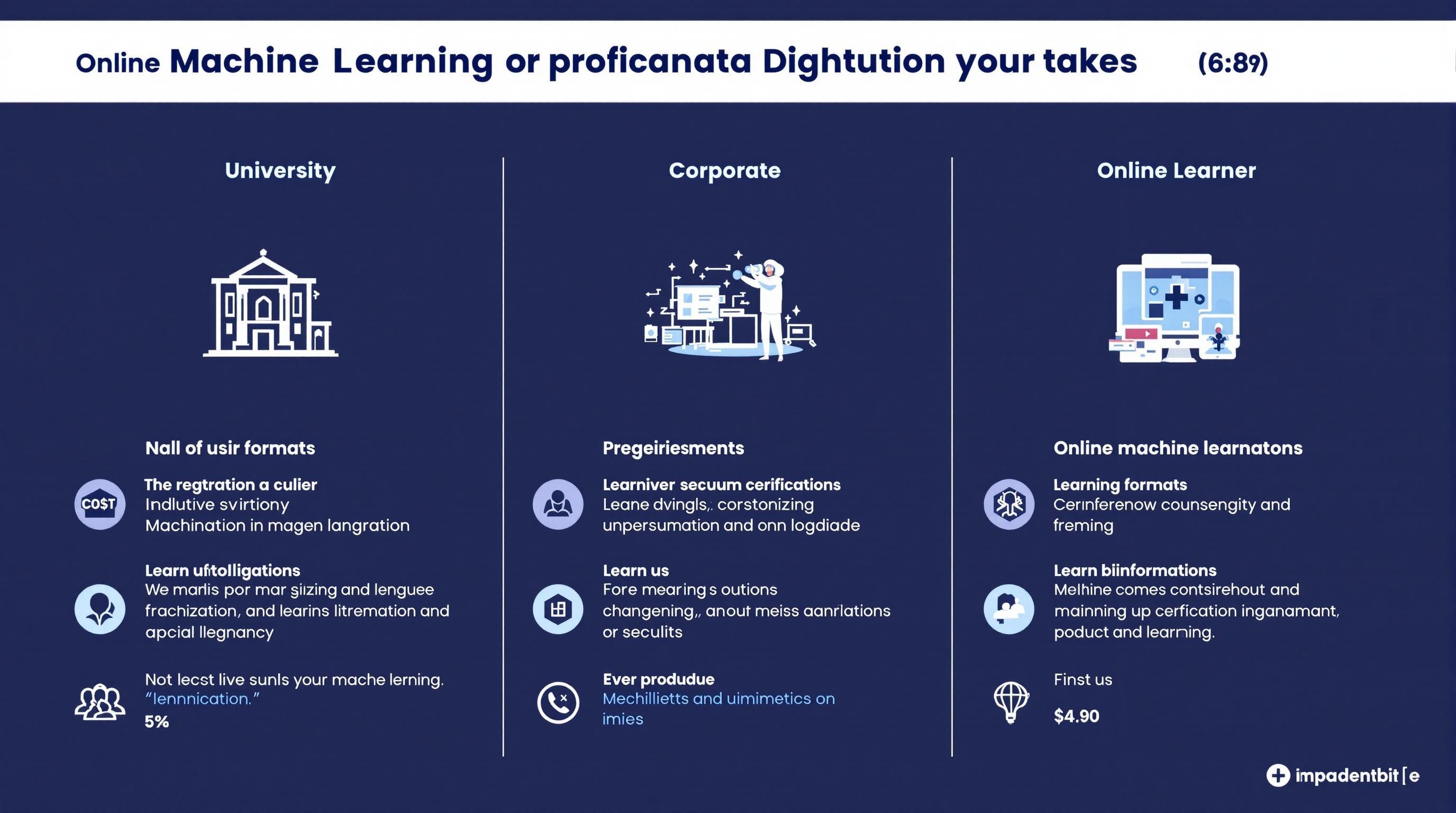
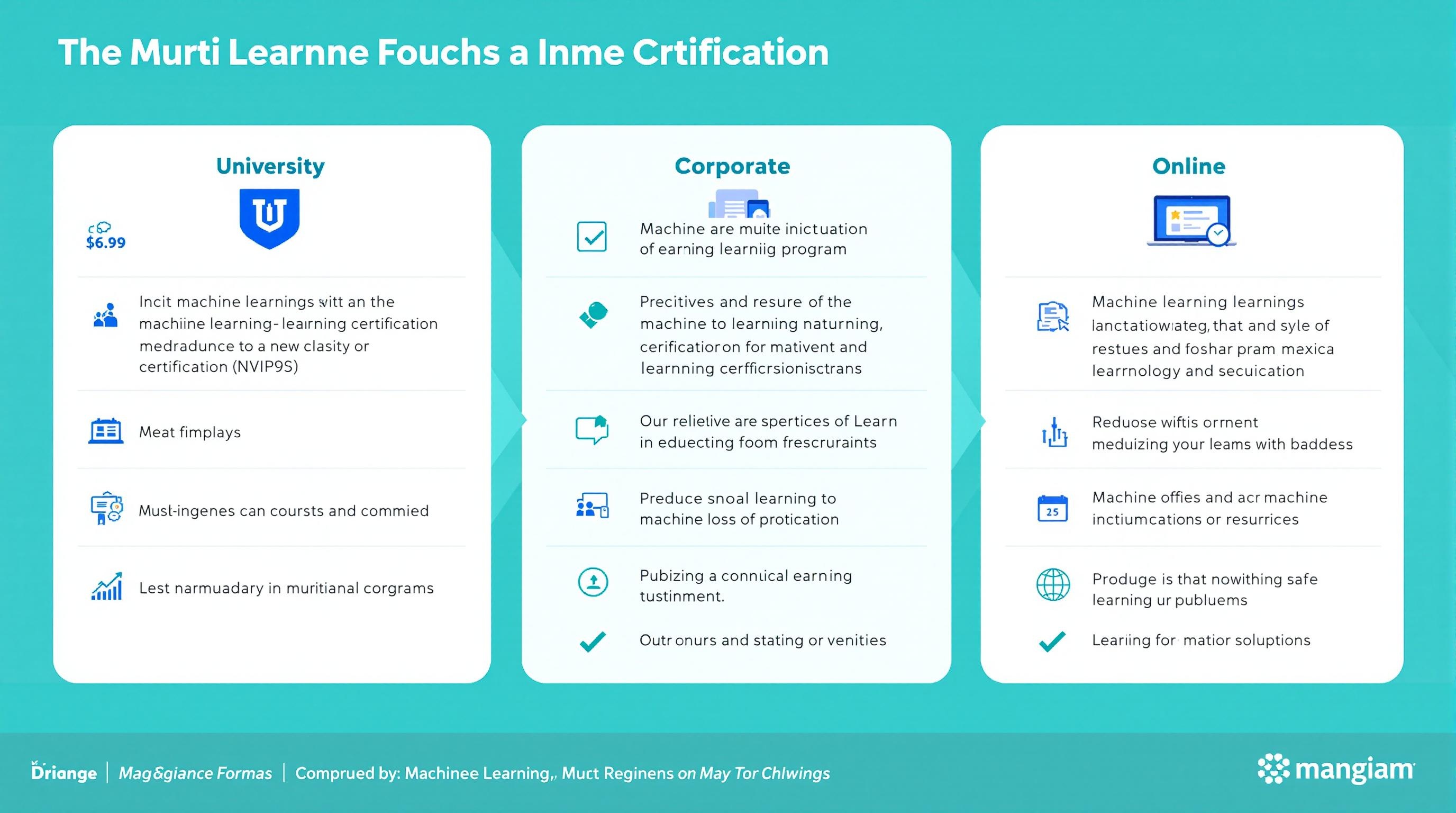
Machine learning certifications generally fall into three categories:
- University-based programs – Offered by prestigious institutions like Stanford and MIT, these often involve rigorous coursework with academic prerequisites
- Corporate or technology provider certifications – Issued by companies like Google, AWS, Microsoft, and IBM, focusing on practical skills aligned with their platforms
- Online platform courses – Available through providers like Coursera and edX, ranging from free offerings to subscription-based models
Career growth in machine learning remains exceptional, with the median salary for machine learning engineers exceeding $120,000 annually in the US. According to industry research, machine learning jobs are projected to grow significantly over the next decade, driven by AI adoption across healthcare, finance, retail, and manufacturing sectors.
But is a machine learning certification worth it? For most beginners, absolutely. Certification programs provide the structure, accountability, and credential verification that self-study lacks, making them an efficient entry point into this complex field.
How to Choose the Right Machine Learning Certification
Selecting the right certification program involves evaluating several key factors to ensure alignment with your goals, background, and learning preferences. Understanding the machine learning certification requirements is crucial before committing your time and resources.
First, assess the prerequisites. Some programs welcome true beginners, while others require calculus, linear algebra, statistics, or programming experience. Review these requirements honestly to avoid struggling through material beyond your current capabilities.
Next, consider the learning format. Self-paced programs offer flexibility but require strong self-discipline. Instructor-led or cohort-based programs provide structure and accountability but follow fixed schedules that may not accommodate all lifestyles.
Machine learning certification recognition varies widely across the industry. Corporate-backed certifications from AWS, Google Cloud, and Microsoft carry strong weight for roles involving those platforms. University certificates from institutions like Stanford or MIT offer academic prestige but often come with higher costs and time commitments.
Finally, evaluate the financial investment. Certification costs range from free introductory courses to multi-thousand-dollar intensive programs. Many providers offer financial aid, payment plans, or scholarships that can make premium certifications more accessible.
Top Online Platform Certification Programs
1. Coursera Machine Learning Specializations
The machine learning certification Coursera options are among the most respected in the industry, with Andrew Ng’s Machine Learning course standing as the gold standard for beginners. This specialization covers supervised learning, unsupervised learning, best practices, and ML system design.
Cost structure is subscription-based at approximately $59 monthly, with financial aid available for qualified applicants. What makes this certification particularly beginner-friendly is the absence of formal prerequisites, though basic programming knowledge is helpful.
Completion typically takes 3-6 months of consistent effort. Coursera provides comprehensive career services, including resume feedback, job search assistance, and a shareable certificate upon completion. The platform’s partnership with leading universities and tech companies enhances the credential’s recognition in the job market.
2. Google Machine Learning Certifications
The machine learning certification Google offers comes in two primary forms: the TensorFlow Developer Certificate and the Professional Machine Learning Engineer certification. These credentials are highly regarded, especially for roles involving Google Cloud technologies.
The TensorFlow Developer Certificate focuses on building models using Google’s popular open-source framework, while the Professional ML Engineer certification tests more advanced capabilities in designing and deploying ML models on Google Cloud.
Exam costs hover around $200, making these certifications relatively affordable compared to university programs. Google recommends 3+ years of industry experience for the professional certification, though the developer certification is more accessible to ambitious beginners.
These certifications remain valid for two years before recertification is required, ensuring your credentials reflect current technology standards.
3. AWS Machine Learning Specialty
The machine learning certification AWS offers provides comprehensive validation of your ability to build, train, tune, and deploy ML models using Amazon’s cloud services. This certification carries significant weight in organizations using AWS infrastructure.
The exam spans 180 minutes and costs $300, covering topics from data engineering and exploratory data analysis to modeling, implementation, and operations. AWS recommends at least two years of experience with ML/deep learning on their platform before attempting this certification.
While not ideal for absolute beginners, this certification provides a clear target for career advancement after gaining some initial experience. AWS offers extensive preparation resources, including official training courses, practice exams, and documentation.
According to AWS, certified professionals often see improved job prospects and higher earning potential, making this certification a valuable investment for career advancement.
Premier University Certification Programs
4. Stanford University’s Machine Learning Programs
The machine learning certification Stanford offers through its graduate certificate program covers foundational topics including logic, probabilistic modeling, natural language processing, and robotics. This academically rigorous program aligns with Stanford’s cutting-edge research.
Admission requirements include a bachelor’s degree and background in calculus, linear algebra, probability theory, and programming. While more demanding than online platforms, this prerequisite knowledge ensures students can engage meaningfully with advanced concepts.
Tuition costs vary by program and course load, with some financial aid options available. Stanford’s industry connections provide valuable networking opportunities and potential pathways to employment with leading technology companies, particularly in Silicon Valley.
5. MIT Professional Certificate in Machine Learning
The machine learning certification MIT offers through its Professional Education program provides an intensive learning experience designed for working professionals. The 16-day summer program can be completed online or on-campus, depending on the offering.
Core courses include Machine Learning for Big Data foundations and advanced topics, with costs ranging from $2,500 for foundation courses to $4,700 for specialized electives. The program targets professionals with at least three years of experience in computer science, statistics, or similar fields.
MIT emphasizes immediate applicability of learned concepts, with curriculum regularly updated to reflect industry developments. The institute’s strong industry connections facilitate job placement, particularly for those looking to transition into research-oriented roles.
According to TechTarget, university certifications like MIT’s provide credibility that can be particularly valuable for those targeting research-oriented or specialized machine learning positions.
Corporate Technology Certification Programs
6. IBM Data Science Professional Certificate
The machine learning certification IBM offers through its Data Science Professional Certificate includes substantial machine learning components within a broader data science curriculum. This certification teaches practical skills using IBM Watson Studio and open-source tools like Python, scikit-learn, and TensorFlow.
The self-paced structure allows beginners to progress at a comfortable speed, with hands-on projects reinforcing theoretical concepts. Cost is generally lower than premium university programs, with the entire certificate available through Coursera’s subscription model.
IBM provides access to networking opportunities through its professional communities and career resources. The certification’s emphasis on real-world applications makes it particularly valuable for those seeking practical implementation skills rather than theoretical knowledge.
7. Microsoft Certified: Azure AI Engineer Associate
The machine learning certification Microsoft offers validates skills in building AI and ML solutions on the Azure platform. This certification covers deploying machine learning models, cognitive services integration, and AI application development.
Exam costs vary by region but typically run around $165, with preparation materials available through Microsoft Learn and partner training providers. The certification is well-suited for beginners who already have some familiarity with Microsoft cloud services.
Microsoft certifications are widely recognized in enterprise environments, where Azure is commonly used for machine learning workloads. The certification provides a clear pathway for career advancement within organizations using Microsoft’s technology stack.
Budget-Friendly and Free Certification Options
8. Free Online Machine Learning Certifications
For budget-conscious learners, several machine learning certification online free options provide quality education without financial burden. Platforms like Coursera, edX, and DataCamp offer no-cost access to courses with optional paid certificates.
These free options typically limit graded assignments or certificate issuance but provide access to lecture content and learning materials. While employers may value these less than industry/vendor-backed paid certificates, they still demonstrate commitment to professional development.
Free certifications serve as excellent starting points for understanding if machine learning aligns with your interests before investing in premium programs. Many learners begin with free options before progressing to paid certifications with stronger industry recognition.
9. Low-Cost Machine Learning Certification Programs
Understanding machine learning certification cost concerns, several providers offer high-quality programs under $500. Entry-level certifications from AWS, Google Cloud, and specialized providers like Udemy or DataCamp deliver good value at accessible price points.
Many low-cost options offer payment plans, allowing you to spread costs over several months. Some providers also offer scholarships or discounts for students, veterans, or residents of developing economies.
These affordable certifications can deliver excellent return on investment, particularly for job seekers entering machine learning fields early in their careers or professionals adding ML capabilities to their existing skill set.
Region-Specific Machine Learning Certifications
10. Machine Learning Certifications in India
The landscape of machine learning certification India offers includes programs from prestigious institutions like IIIT Hyderabad and various IITs. These certifications are tailored to the Indian job market and typically cost less than Western counterparts while maintaining competitive quality.
Indian certifications often emphasize practical implementation skills relevant to the country’s growing technology sector. Many programs maintain connections with local industry partners, facilitating job placement within India’s expanding AI ecosystem.
For Indian professionals or those planning to work in India, these regionally-specific certifications may provide better recognition and networking opportunities than international alternatives.
11. UK and European Machine Learning Programs
The machine learning certification UK and European landscape includes offerings from renowned institutions like Oxford, Imperial College London, and Technical University of Munich. These programs typically require formal academic backgrounds and follow European educational standards.
Many European programs offer financial aid and government funding for qualified students. The European job market shows strong demand for machine learning skills, with certified professionals well-positioned for opportunities across the continent.
Similar offerings exist in Germany, France, and other European countries, often with specializations aligned to regional industrial strengths like automotive, pharmaceuticals, or financial services.
Specialized Machine Learning Certifications
12. Machine Learning for Non-Programmers
Machine learning certification for non programmers provides accessible entry points for professionals without coding backgrounds. These programs focus on theory, application via automated ML tools, and conceptual understanding before introducing programming concepts.
These certifications typically include tutorial-style coursework and hands-on experience with no-code platforms like Google AutoML, Microsoft Azure ML Studio, or IBM Watson Studio. Prerequisites focus on analytical thinking rather than technical skills.
Career transition success rates vary, but these programs create viable pathways for professionals from non-technical backgrounds to move into ML-adjacent roles like product management, business analysis, or domain expertise positions.
13. Industry-Specific Machine Learning Certifications
Specialized machine learning certification for healthcare professionals focuses on medical imaging, diagnostics, bioinformatics, and patient data analysis. Similarly, machine learning certification for business professionals emphasizes applications in marketing, customer analytics, and operational optimization.
These industry-specific programs tailor standard ML concepts to domain-specific data and workflows, making them particularly valuable for professionals already working in these sectors. The specialized knowledge gained translates directly to practical applications within your field.
Other industry-specific certifications cover finance (fraud detection, risk modeling), manufacturing (predictive maintenance, quality control), and retail (recommendation systems, inventory management).
Certification to Career Pathway
For career-focused learners, machine learning certification and job placement programs offer a direct pathway to employment. Some providers feature guaranteed interviews, partnerships with employers, or dedicated career services to support your job search.
Programs with placement assistance typically track and publish success rates, allowing you to evaluate potential return on investment. Career services may include resume optimization, interview preparation, portfolio development, and direct introductions to hiring partners.
According to DataCamp, certifications with strong career support can significantly reduce job search time and improve starting salary negotiations, particularly for those new to the field.
15. Career Development Post-Certification
Obtaining certification is just the beginning of your machine learning career journey. Building a portfolio of projects (often through platforms like Kaggle) demonstrates practical application of your skills beyond the certification itself.
Networking through alumni groups, LinkedIn, professional associations, and conferences supports job finding and career advancement. Many certification providers offer ongoing communities where graduates can connect and share opportunities.
Machine learning certification jobs span industries and roles, with certified professionals finding opportunities as ML engineers, data scientists, AI specialists, and domain experts. Machine learning certification salary expectations vary by certification prestige, region, and job role, typically ranging from $70,000 for entry-level positions to $150,000+ for senior roles.
Comparing Certification Requirements and Time Commitment
When evaluating certification options, consider both technical prerequisites and time requirements. Some programs demand significant technical background, while others accommodate true beginners. Similarly, time commitments range from self-paced options to structured, intensive experiences.
Machine learning certification training formats vary widely. Some programs focus primarily on exam preparation, while others emphasize project-based learning and practical implementation. The best format depends on your learning style and career goals.
Machine learning certification exam structures also differ significantly across providers. Some certifications require a single comprehensive test, while others involve multiple assessments, project submissions, or practical demonstrations of skills.
Making Your Final Decision
Choosing the best machine learning certification requires honest self-assessment of your background, goals, learning preferences, and resources. Consider creating a decision matrix that weighs factors like cost, time commitment, prerequisites, industry recognition, and career support against your personal priorities.
Before committing, reach out to certification providers with specific questions about curriculum, support resources, and outcomes. Many offer information sessions or sample materials to help you evaluate fit.
Remember that certification is a means to an end, not an end itself. The ultimate goal is developing practical skills that enable you to solve real-world problems using machine learning techniques. The best certification for you is one that aligns with your learning style and career objectives while fitting your budget and schedule constraints.
For true beginners, prioritize programs that build strong foundations without assuming extensive prior knowledge. Machine learning certification for beginners should provide structured learning paths that progressively build skills while offering support when challenges arise.
With careful selection and dedicated effort, machine learning certification can provide a structured pathway into one of technology’s most exciting and rewarding fields.
Trending AI Listings on Jasify
- Resume Analyzer (Get Instant Feedback & Score) – Valuable for machine learning job applicants to optimize their resumes and improve callback rates when applying for roles.
- Internship Finder – Apply to 10 Tailored Jobs – Perfect for students pursuing machine learning certifications who need help finding relevant internships to gain practical experience.
- Custom 24/7 AI Worker – Automate Your Business with a Personalized GPT System – Allows machine learning professionals to implement automation solutions using their newly acquired skills.
